The Gig Economy Podcasts That Explain Why 70 Million Americans Are Freelancing Now

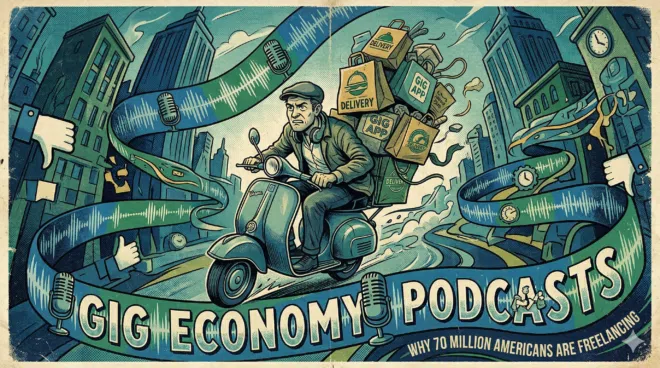
Setting your own schedule is the dream, right?
The. Dream.
I’m writing this while sitting on a park bench outside the library. It’s a lovely day for door dashing, but while I’m between orders, the multi-tasking nightmare that is freelance life must go on.
But seriously, listening to podcasts while I’m making deliveries has really made a difference.
There’s twenty plus podcasts here. Getting all of that info in there… That takes a good deal of time.
It’s the only way I have time to consume everything worth listening to.
Tomorrow is the first Friday of the month.
And we all know what that means!
Drumroll.
That’s right, say it with me, jobs report. Jobs report!
But I’m not sure we need to wait for the report to be bummed.
Oracle laid off thousands of people this week in a pretty insensitive manner. They sent a mass email first thing in the morning.
Ouch.

Editor’s Note: We were way off base on the job numbers report. How’d that happen. Not the best at predicting the future apparently. 178,000 was truly more than we thought.
It’s tough out there for writers, especially freelance writers at the moment.
But we aren’t alone.
70 million Americans are doing freelance work right now.
That’s 36% of the workforce.
We’re contributing $1.27 trillion to the US economy.
Half the country will be freelancing next year.
That’s a marked shift from how it was growing up in the 90s. That’s why I spent the last six weeks listening to gig economy podcasts while delivering food.
So get hop on the train and I’ll go through it with you.
Here’s what I learned.
Table of Contents
Remember When Gig Work Was Supposed to Be Liberating?
Yeah.
Here’s the thing about that.
Freelancing isn’t new, but the gig economy is. When the gig economy first started, it was great. Americans could be lazier and you could make some extra money to fill in any other shortfalls. It was beneficial and not in the least bit stressful.
It started as a sort of fun novelty.
Then it became efficient.
That’s when labor tends to lose ground.
The Efficiency Problem
Setting your own schedule has its advantages.
I don’t think anyone can really say, so long as they have any semblance of self-discipline, that setting your own schedule isn’t more beneficial.
But it isn’t all sunshine and lollipops. There’s a lot more paperwork to do. Massive competition Lower fees. Bad tips. If you were lucky enough to get a tip. Times is tough!
Not to mention there’s no healthcare to deal with the stress of the whole endeavor.
Last year I spent a couple weeks in the hospital with sepsis. Still tip tapping away on my laptop daily, hooked to IVs and monitors. Without one god damned clue how I was going to pay the eventual bill.
Not that I had much choice in the matter.
Infections don’t really ask if it’s convenient for them to take up residence in your bloodstream. They’re freeloaders like that.
Not me though.
I was “grinding.” I hate that term. I wasn’t rising, but I was grinding.
Worth reiterating, It’s tough out there, gang.
The numbers tell the story better than I can. Full-time independent workers doubled from 13.6 million in 2020 to 27.7 million in 2024. White-collar gig jobs are up 17% as of March 2025.
I’m seeing more and more random gig-type apps popping up.
Each one promising flexibility.
But each one taking a bigger cut.
You know which ones I’m talking about.
The ones that send you push notifications like they’re doing you a favor. What the gig economy lacks in upward mobility, it makes up for with community.
And that’s where these podcasts come in.
Why Podcasts Matter When You’re Alone in Your Car
Gig work is isolating.
No coworkers. No water cooler. No one to complain to when the app crashes during a surge. With your imposed lonely happy hour waiting on support. Just anonymous NPCs living their siloed lives.
Don’t get me wrong, I do like the opportunity of DoorDash or Postmates.
But there’s no question their motivations are their shareholders’ bottom line.
You aren’t an employee (except California?).
So you aren’t a team member so much as you are a cog in their money-making machine.
When the app crashes—as it did this past week—you feel pretty isolated.
Strikes pile up through no fault of your own. I’m saying, it’s stressful.
Podcasts fill that gap.
They’re the new parasocial break room banter when your text group is busy.
They are the place where you find out you’re not the only one getting screwed by algorithm changes. These shows offer real talk about pay and exploitation. You know, the fun stuff.
You hear strategies that actually work.
Receive validation that you’re not alone.
Warning signs about platforms screwing workers.
There’s some commiseration.
My listening method is simple.
I’m Up at 5 for the morning breakfast rush. My go bag packed for the mid-morning lull, which is when I do a good deal of writing. And back at it for the dinner rush.
I’ve kind of begun to structure the day around how long the podcasts are.
Take my breaks accordingly. Around release schedules and episode length. I’ll admit that having some structure to a wide open schedule is helpful, so long as you’re making the decisions. Right?
Door Dash plus podcasts equals research time. Otherwise I’d never have enough time.
I turned isolation into education. Or at least that’s what I tell myself when I’m sitting in a parking lot waiting for an order. But that’s what you’ve got to do to make your side hustles work You have to create synergy.
But you’ve likely dabbled in this before. The math doesn’t lie.
The trends are wild.
60% of freelancers now use AI-powered platforms, up from 35% in 2023.
By 2027, freelancers could be 50% or more of the US workforce.
By 2035, the global gig economy could hit $2.5 trillion.
After listening to 30 of these shows… I’m not sure if this is dystopian.
But what I am sure of is that we’re in this together for the foreseeable.
Here are the podcasts that helped me understand what’s really happening.
The Podcasts: Find Your People
Not all gig work is the same.
If you drive for Uber, it’s not a 1:1 advice technique for someone doing Postmates, Door Dash, or, even Instacart. Different problems need different podcasts.
I organized these 30 shows into 6 categories.
Find your cluster, find your show, find your people.
Rideshare & Delivery Worker Diaries
Who this is for: Uber/Lyft drivers, DoorDash/Postmates/Instacart delivery workers
Platform changes happen fast. Lightning fast.
And you’re always the last to know. Usually by some type of penalization that comes out of left field.
You need real-time strategies.
These shows have the most direct impact on daily earnings.
Rideshare Rodeo Podcast
Rideshare Rodeo covers platform news, driver reactions, deactivations (boo), strikes, pay changes, and app updates affecting Uber, Lyft, and delivery workers.
It helps you track fast-moving platform changes and hear working drivers interpret what those changes mean in practice.
If you’re driving or delivering, this is your early warning system.
The one that tells you about the pay cut before you find out the hard way.
The Gig Work Podcast
The Gig Work Podcast focuses on rideshare and delivery gig work with practical tips, platform updates, and strategies for maximizing earnings across multiple apps.
It gives you actionable advice on juggling multiple platforms and optimizing your time on the road.
Perfect for multi-app workers trying to maximize hourly earnings. You know who you are.
Three apps open at once, trying to figure out which order is actually worth taking.
The GigTube Podcast
The GigTube Podcast discusses rideshare and delivery work with a focus on YouTube content creation, platform changes, and building an audience while doing gig work.
It shows you how to document your gig work and potentially create a second income stream through content.
Great for drivers who want to turn their experience into content.
Because if you’re going to suffer, you might as well monetize it.
Life Of A Gig Worker
Life Of A Gig Worker shares personal stories and experiences from rideshare and delivery workers, covering daily challenges, platform issues, and community support.
It provides validation and community for workers feeling isolated or frustrated with platform treatment.
Listen when you need to know you’re not alone in the struggle.
Quick mentions from this cluster:
Rideshare Guy Podcast – Platform news and driver strategies with industry expert Harry Campbell
Deliver On This – Delivery-focused tips and platform comparisons
The Rideshare Hub – Community-driven discussions on rideshare challenges
Gig Economy Guru – Multi-platform strategies for maximizing delivery earnings
Drive Time Radio – Real-time driver experiences and platform updates
Freelance & Remote Work
Who this is for: Writers, designers, developers, consultants, knowledge workers
White-collar gig work is exploding. It’s up 17% in 2025. 2026 isn’t looking like gangbusters for traditional employment.
While the payment is similar, and tax responsibility, different challenges exist for freelance “office workers” than delivery or rideshare.
More about client management, pricing, boundaries. More competition from AI and, worse, from clients who believe they are experts because of AI.
This is my world.
Freelance writing in 2026 is brutal.
Competition is fierce.
Maybe it won’t always be this way, but AI has made life a lot different.
Not only for freelancers who have seen clients drop out. “Why should I pay you to write this when AI can do it for pennies on the dollar?” is a common refrain you’re going to be hearing for a while. At least until this thing implodes or clients realize prompting is a skill unto itself.
Expectations are set too high.
Even if we wanted to go back to the job market, there’s an AI arms race.
Nobody is sure where that’s going to end up.
I don’t know honestly. Maybe it’s time to get some thicker skin and embrace the horror. Ride the bomb into the ground Slim Pickins style.
AI gatekeepers pruning AI-generated applications is some wacky stuff.
But these shows helped me understand I’m not failing… no no… the system is.
That’s worth something.
The Human Cloud Podcast
The Human Cloud covers the future of work, freelance platforms, remote work trends, and how technology is reshaping independent work.
It helps you understand the bigger forces shaping your freelance career and where the industry is heading.
Essential for freelancers who want to stay ahead of market shifts.
Or at least understand why everything feels harder than it used to.
Freelance to Freedom
Freelance to Freedom focuses on building a sustainable freelance business with strategies for pricing, client management, and transitioning from employee to independent.
It gives you practical frameworks for running your freelance work like a real business.
Perfect for new freelancers or those struggling to make it sustainable.
You know, most of us.
Being Freelance
Being Freelance features interviews with successful freelancers across industries, covering practical advice on rates, clients, and building a freelance career.
It provides real examples and strategies from people who’ve made freelancing work long-term.
Listen for inspiration and concrete tactics from experienced freelancers.
The ones who somehow figured it out.
Quick mentions from this cluster:
Remote Works – Remote work strategies and digital nomad lifestyle
The Side Hustle Show – Building freelance income alongside full-time work
Broad Gig Economy
Who this is for: Anyone trying to understand the bigger picture
These shows provide context for why your pay keeps dropping. What policy changes that affect all gig workers, like your California AB 5 scenarios.
Future trends like AI, regulation, and platform power are also on the menu.
The stuff that makes you realize this isn’t just you… that you’re in a sinking ship with plenty of other motivated people.
It’s systemic.
These shows helped me understand the $1.27 trillion economy stat.
Not just numbers—real impact on real workers.
The GIG Economy Podcast
The GIG Economy Podcast covers gig economy news, platform updates, worker stories, and industry trends across rideshare, delivery, and freelance work.
It provides comprehensive coverage of the entire gig economy landscape with weekly updates.
This one ranks #1 on Google for a reason.
It’s the most complete overview available.
Start here if you’re new to gig economy podcasts.
Side Hustle Nation

Your mental health and your personal motivation is vital to success in 2026. Sometimes you need a little push. Just a small kick in the posterior to keep the grind alive.
Side Hustle Nation explores ways to earn extra income through gig work, online businesses, and creative side projects.
It gives you ideas and strategies for diversifying income beyond a single platform or client.
Great for people exploring gig work as a supplement to traditional employment.
Back when that was still a thing.
The Future of Work Podcast
The Future of Work Podcast examines how technology, automation, and changing employment models are reshaping work and careers.
It helps you understand long-term trends that will affect your gig work in the coming years.
Essential for strategic thinking about your career trajectory.
Or at least understanding what’s coming next.
Platform-Specific Deep Dives
Who this is for: Workers committed to specific platforms
Platform algorithms change constantly.
You need insider knowledge.
Community tips can double your earnings.
Or at least help you avoid getting deactivated for reasons you don’t understand.
Uber Driver Therapy Podcast

Another podcast that is focusing on our unraveling mental health.
Sometimes all you need is to know you aren’t the only person experiencing what seems impossible. No… it’s happening to the rest of us too.
I like this podcast as it’s fairly new, and a fresh perspective on starting in the “efficient” gig economy is a nice change of pace.
Essential if Uber is your primary income source.
Upwork Unlocked
Freelance Unlocked is going to be your ride or die for this new reality.
While the archive is focused on tips and tricks for the Upwork platform specifically, the pivot is going to be focused on the reality, that spending all your time and effort on one platform isn’t going to cut the cheese.
Let alone buy the cheese.
If you’re even thinking of making the leap (or you’ve been made redundant) this is a must listen.
Gig Worker Community & Stories
Who this is for: Anyone feeling isolated or burnt out
These shows provide validation that you’re not alone.
Real worker stories, not corporate PR.
The human side of gig work.
These are the shows that reminded me we’re in this together.
Community over competition.
Shared struggle creates solidarity.
MyGigsters
MyGigsters shares personal stories from gig workers across industries, covering challenges, successes, and the reality of independent work.
It provides emotional support and community for workers feeling isolated.
Listen when you need to remember you’re part of something bigger.
Even if that something is a mess.
Let’s Talk About the Podcasts That Are Basically Just Platform Propaganda
You know the ones.
Not every podcast is a cheerleader. And that’s good.
Some of these shows are “hustle harder” motivational garbage.
The kind that blame you for not “optimizing” hard enough. Which, for newbies, is really deflating.
Others tackle the real issues: exploitation, unfair pay, worker rights.
You need both perspectives to survive. It can’t all be sunshine. But you can’t spend your life analyzing and thinking about how to solve every problem before you take the first step.
But you need to know which is which.
What to Watch Out For
Podcasts that blame workers for low earnings. That’s just bad middle management mindset.
Shows that ignore platform power dynamics. Because people be politickin’.
Content that’s just affiliate marketing for gig apps.
The ones that make you feel like you’re failing when really the system is designed to extract maximum value from your labor.
What to Seek Out
Shows that cover worker organizing. Because, we have to be honest, in 2026, labor is losing the capital versus labor battle.
Podcasts that explain your legal rights.
Content that calls out platform BS.
The ones that make you feel less alone and more informed.
The numbers don’t lie. You’re going to have to engage with this economy at some point. There’s just too much instability.
Platform revenue is projected at $13.8 billion by 2030, up from $5.6 billion in 2024.
Workers aren’t seeing that growth in their paychecks.
We’re all very happy for them. Rising tides lift all… whatever.
That’s why community and information matter.
I’m not sure if this is dystopian.
But knowledge is power.
These podcasts are how we stay informed and connected.
Still Here
So I’m still here. Looking for the perfect third space to work. Still waiting for my phone to ping with an offer worth packing up for.
I’m not going to tell you it isn’t exhausting. But…
70 million Americans are in the same boat.
Half the country will be freelancing by next year.
This isn’t a side hustle anymore. Increasingly, it’s the economy. Full stop.
These podcasts taught me the gig economy isn’t going back to “the good old days.”
But we’re not powerless.
Information, community, and solidarity are our tools.
After listening to these 30 gig economy podcasts, here’s what I know: we’re in this together.
Whether you’re driving, delivering, writing, or designing.
Find your cluster, find your show, find your people.
That’s what the best gig economy podcasts do—they remind us we’re not alone.
FAQ
Q: What’s the best gig economy podcast for beginners?
A: The GIG Economy Podcast is your best starting point because it covers the entire landscape—rideshare, delivery, freelance, and policy—with weekly updates that help you understand how all the pieces fit together.
Q: Are there podcasts specifically for rideshare drivers?
A: Yes, Rideshare Rodeo Podcast and The Gig Work Podcast focus specifically on rideshare and delivery work with platform updates, driver strategies, and real-time news that affects your earnings.
Q: Which podcasts cover gig worker rights and exploitation?
A: Gig Economy Warriors focuses on worker organizing and platform accountability, while The GIG Economy Podcast regularly covers policy changes and worker advocacy efforts.
Q: How many Americans are doing gig work in 2026?
A: 70 million Americans are doing freelance work as of 2026, representing 36% of the US workforce and contributing $1.27 trillion to the economy.
Q: Is the gig economy still growing?
A: Yes, dramatically—freelancers could be 50% or more of the US workforce by 2027, and the global gig economy market could reach $2.5 trillion by 2035.
Q: What’s the difference between freelancing and gig work?
A: Freelancing has existed for decades and typically involves longer-term client relationships and specialized skills, while gig work refers to the platform-mediated, on-demand economy that emerged with apps like Uber and TaskRabbit in the 2010s.

Previous Story
Find Your Podcasts to Fall Asleep to in 2026
Next Story
The 30 Best Educational Podcasts of 2026: A Reformed Slacker's Guide to Actually Learning Something