


Introduction
Hey, we’re three quarters of the way through 2025. How are you feeling?
Where’s that mental health dipstick at?
Do you feel that tremor of uneasy energy that seems to be permeating society at just about every level?
Well, you’re not alone, and that’s why we thought it’d be worth revisiting the best anxiety podcasts because, if there was ever a time… right?
Even if you aren’t a decades long anxiety combatant like I am, there’s a good chance this year have you feeling something you aren’t used to. That’s called anxiety and it’s completely normal under the circumstances.
So, listen to that. But if it’s getting out of hand, there are some other things besides your roiling gut and inner monologue worth a listen.
Alright ears… do what the mind can’t. Or won’t…
Why People Turn to Podcasts for Anxiety
The Science Behind Audio Therapy
Your brain processes audio differently than text, and that difference matters when you’re spiraling.
Reading requires focused attention. And that’s something something anxiety destroys.

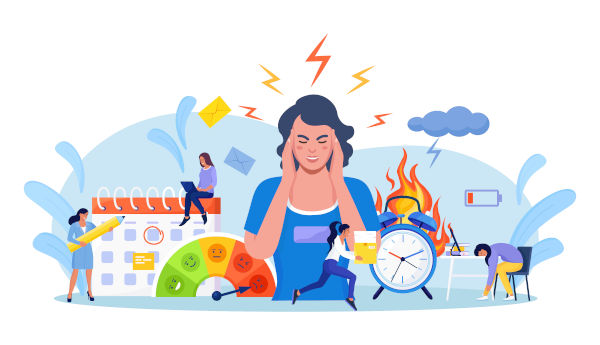
When your mind is racing at 200 mph, trying to concentrate on words on a page is like asking someone having a heart attack to do a little back of the napkin long division.
Audio content flows around your scattered thoughts instead of demanding they line up in formation.
There’s actual neuroscience backing this up.
Listening to familiar voices triggers the same neural pathways as being with trusted friends.
It’s called parasocial relationships, and before you roll your eyes, remember that humans evolved in small tribes where recognizing voices meant survival.
Your amygdala doesn’t know the difference between your therapist sitting across from you and Drew Linsalata’s voice coming through your AirPods.
Plus, you can multitask.
Anxiety makes sitting still torture, but podcasts work while you’re walking, driving, or doing dishes.
Movement + audio = anxiety’s kryptonite.
Out of excuses. It’s high time to throw on an anxiety disorder podcast.
What Makes Anxiety Podcasts Different
Most mental health content treats anxiety like a problem to solve.
Anxiety podcasts treat it like weather to navigate.
Authentic hosts don’t promise to “cure” your anxiety in 30 days or sell you courses on “hacking your mindset.” Those are scams. Snake oil scams.
They acknowledge that anxiety is part of the human experience, then give you tools that make functioning a little bit easier.
That’s refreshingly honest in a wellness industry built on false promises. And anyone with anxiety will tell you, just a little bit easier, makes a world of difference.
These shows also create community without the pressure of actual social interaction.
You get the benefit of knowing you’re not alone without having to explain yourself to Karen from accounting.
It’s group therapy for introverts.
Best Anxiety Podcasts in 2025
Professional-Led Shows for Clinical Insights
The Anxiety Coaches Podcast
Host: Gina Ryan

This is where I send people who want actual strategies, not feel-good platitudes.
Ryan’s a licensed therapist who treats anxiety like the business problem it is — something that’s costing you sleep, productivity, and peace of mind.
Her episodes are surgical: 20-30 minutes of CBT techniques you can use immediately.
No fluff about “manifesting calm energy.”
Just practical tools for when your brain decides that email from your boss definitely means you’re getting fired.
Your Anxiety Toolkit
Host: Kimberley Quinlan
YAT takes the clinical approach but makes it digestible.
Quinlan’s an LMFT who specializes in OCD and anxiety disorders, and she breaks down complex therapeutic concepts like she’s explaining them to a smart friend.
Her “uncertainty training” episodes are gold for overthinkers who need permission to not have all the answers.
The show updates weekly, which matters when you’re dealing with something that changes daily.
The Restored Minds Show
Host: Matt Codde
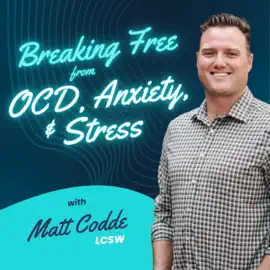
Restored Minds hits different because Codde’s a therapist who also lived through severe OCD.
He gets the intersection between anxiety and obsessive thinking in ways that purely academic approaches miss.
His episodes on “anxiety vs. OCD” helped me understand why some coping strategies backfire — they feed the compulsion cycle instead of breaking it.
Personal Story Podcasts for Relatability
The Anxious Truth
Host: Drew Linsalata
I love lived experience content. This is the gold standard for lived-experience content.
Linsalata recovered from severe agoraphobia and panic disorder, then spent years helping others do the same.
What makes this show work is his refusal to sugarcoat the process.
Recovery isn’t linear, setbacks are normal, and sometimes you have to feel worse before you feel better.
Reddit’s r/Anxiety community mentions this show constantly, which tells you everything about its street cred.
Owning It: The Anxiety Podcast
Host: Caroline Foran
Need an Irish perspective to anxiety stigma? We get hung up in America on our own problems, so a little outside perspective can help right the ship.
Foran’s a journalist who went public with her anxiety story when mental health conversations were still taboo in Ireland.
Her episodes blend personal narrative with cultural commentary about why we’re all so anxious in the first place.
Spoiler: It’s not just you, it’s late-stage capitalism.
Disordered: An Anxiety Podcast
Hosts: Joshua Fletcher with Drew Linsalata
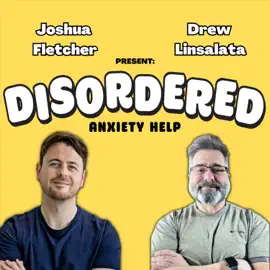
Fletcher’s a UK-based anxiety specialist who brings the clinical side, while Linsalata provides the recovery perspective.
Their chemistry makes complex topics accessible, and they’re not afraid to call out wellness industry BS.
Their episode on “anxiety influencers” should be required listening for anyone tempted by Instagram therapists.
Hidden Gems Worth Discovering
Not Another Anxiety Show
Host: Kelli Walker
Kelli takes the medical professional angle without the medical jargon.
Walker’s a registered nurse who understands anxiety from both sides — as a healthcare provider and someone who’s lived it.
Her episodes on “medical anxiety” are particularly valuable if you’re someone who spirals every time you need to see a doctor.
Anxious in Austin
Hosts: Dr. Marianne Stout and Dr. Thomas Smithyman
This pod brings regional community focus that most shows miss.
The hosts created this for their local Austin community, but the insights translate everywhere. That said, you should really visit Austin for a couple of days.
Their discussions about anxiety in creative communities hit hard if you’re in any field where your income depends on your ideas.
Stress Bucket Solutions
Host: Gin Lalli
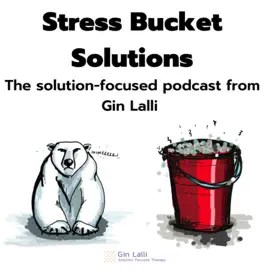
Gin uses the metaphor of a stress bucket to explain why some days you can handle everything and other days a slow WiFi connection sends you over the edge.
Lalli’s another UK-based podcaster, so you get a different cultural perspective on anxiety management. From a cooler, damper, wetter, place than you may be used to. That’s helpful to know. They’ve been in the muck.
Her practical approach to “emptying your stress bucket” makes more sense than most mindfulness advice.
Mindfulness and Meditation Podcasts
Daily Meditation Podcasts for Anxiety Relief
Daily Meditation Podcast
Host: Mary Meckley
I feel like this one has been out there since the podcasting’s inception. Maybe Mary had the foresight to know we were all going to need her assistance over the coming decade and beyond? We’ll reach out for comment.
Mediation doesn’t have to be a weird hipster thing that has a huge learning curve. No, this is what meditation should be — practical, not precious.
Meckley’s episodes are 10-20 minutes max, which is perfect when your attention span is shot.
She doesn’t ask you to “find your center” or visualize yourself as a tree.
Instead, she gives you breathing techniques that work in real situations, like before job interviews or when your kid’s having a meltdown in Target.
Her approach acknowledges that most people can’t sit in lotus position for an hour contemplating the universe.
Some of us need meditation that works while we’re stuck in traffic or waiting for medical test results.
Meditation Minis
Host: Chel Hamilton

She gets the bite-sized approach right.
Episodes run 5-15 minutes, which is the sweet spot for anxious brains that can’t commit to longer sessions.
Hamilton’s voice is naturally calming without being artificially soothing — you know the difference.
Her “anxiety reset” episodes are perfect for those moments when you need to pull yourself together fast.
Calming Anxiety
Host: Martin Hewlett
Calming Anxiety focuses specifically on breathing techniques for anxiety management.
Hewlett’s a former anxiety sufferer who became a breathing coach, so he understands the physiology behind why certain techniques work.
His episodes on “box breathing” and “4-7-8 breathing” give you tools you can use anywhere without looking like you’re having a breakdown.
Why Guided Sessions Beat Solo Practice
Here’s the truth about meditation: most people suck at it when they try to go solo.
Your anxious brain will use meditation time to plan your grocery list, replay awkward conversations, or calculate how many years until retirement.
Guided sessions give your scattered thoughts something to follow instead of wandering into worst-case scenario territory.
The professional voice guidance matters more than you’d think.
When someone’s telling you what to focus on, your brain has less opportunity to hijack the session with anxiety spirals.
It’s like having a personal trainer for your mind — someone to keep you on track when you want to quit.
Variety prevents the boredom that kills most meditation practices.
Solo meditation is the same thing every day, which your brain will eventually tune out.
Guided sessions mix up techniques, focus areas, and session lengths so your practice stays engaging.
Plus, there’s accountability without the pressure.
You’re not disappointing a meditation teacher if you skip a day, but having a regular show creates gentle structure.
Maintaining a habit is easier when someone consistently shows up in your feed. Reduce those barriers.
Building Your Podcast Routine
Timing matters more than you think when it comes to anxiety podcasts.
Morning commute listening works if you’re dealing with anticipatory anxiety about the day ahead.
Load up episodes that focus on preparation and confidence-building — not the deep trauma processing stuff that’ll leave you crying in your car before a 9 AM meeting.
Evening wind-down is where the heavy lifting happens.
This is when you can tackle the longer episodes about root causes, childhood patterns, or processing difficult emotions.
Your brain needs time to digest this content, and you don’t want to be analyzing your attachment style right before a client presentation.
Create anxiety-specific playlists for different situations.
I keep a “panic attack toolkit” playlist with 5-10 minute episodes I can access quickly.
There’s also a “can’t sleep” collection with longer, slower-paced content that won’t spike my adrenaline at midnight.
Organization sounds nerdy, but when you’re spiraling, you don’t want to waste time scrolling through episode titles.
Use sleep timers religiously.
Nothing worse than waking up at 3 AM to someone enthusiastically discussing exposure therapy techniques.
Most apps (or even iOS/Android) will let you set a timer such that your podcast fades out.
This is also a good time to mention the advantage of sleep style headphones. Sleeping on earbuds is awful. Podcasts aside, quality sleep is up there on the anxiety positive lifestyle chart.
Active vs. Passive Listening Strategies
Not all podcast listening is created equal, and anxiety content requires different approaches.
Active listening means taking notes during technique-heavy episodes.
When someone’s explaining the 5-4-3-2-1 grounding method or walking through a breathing exercise… go ahead and write that down.
Your anxious brain won’t remember the details when you actually need them. You think it will, but, it won’t. Trusting our brains is how we ended up here in the first place.
Keep a notes app specifically for podcast insights — it becomes your personal anxiety toolkit.
Replay favorite coping segments until they’re muscle memory. Like that physical exercise we’re supposed to be doing regularly.
That said, do what helps.
That 3-minute breathing exercise that actually worked?
Save it. Bookmark it and replay it until you can do it without the audio guide.
The goal is internalizing techniques so they’re available when your phone’s dead or you’re in one of those public spaces we love so much. Or Lisa’s HR presentation.
Combine listening with gentle movement when possible.
Walking while listening to anxiety podcasts is like compound interest for your mental health. And that’s obviously the perfect podcast consumption activity.
Movement helps process the emotional content, and the rhythm of walking syncs well with breathing exercises.
Plus, it’s harder to spiral into catastrophic thinking when your body’s occupied with putting one foot in front of the other.
Passive listening works for background comfort during routine tasks.
Dishes, laundry, commuting — times when you need familiar voices but aren’t actively learning new techniques.
This is when you replay episodes you’ve heard before or choose lighter content that doesn’t require full attention.
How to Pick the Right Podcasts
Matching Content to Your Anxiety Type
The reason anxiety sucks is because it’s different for each person going through it. Nobody’s experience is identical. There’s no vaccine. Everyone’s treatment is going to be a little different.
Podcast content falls into that bucket as well. This is not a one size fits all situation, unfortunately, so you’ll need to discover what works for you in the space. Try on lots of hats. Kiss lots of frogs.
Generalized anxiety needs are wildly different than panic disorder. Content is going to reflect that.
If you’re dealing with constant low-level worry about everything from work deadlines to whether you locked the front door, look for shows that focus on cognitive restructuring and daily management techniques. Setting mental boundaries is paramount.
If you’re having panic attacks, you need hosts who understand the physical symptoms. Podcasts that can guide you through acute episodes with empathy and without making you feel like a lunatic.
Professional guidance vs. peer support comes down to where you are in your journey.
Early in anxiety recovery, clinical perspectives help you understand what’s happening and why.
Shows hosted by therapists give you frameworks and evidence-based strategies.
But once you’ve got the basics down, lived-experience hosts provide the real-world application and long-term perspective that textbooks can’t teach.
Episode length matters more than most people think.
If your attention span is shot, 60-minute deep dives will overwhelm you.
Start with 10-20 minute episodes that deliver one clear takeaway.
You can always graduate to longer content once your brain can handle more complexity.
Some days you need a quick technique refresh; other days you’re ready for the full therapeutic exploration.
Red Flags to Avoid
Unqualified hosts giving medical advice should make you run.
If someone’s promising to “cure” your anxiety through their proprietary method, that’s a hard pass.
Real anxiety professionals acknowledge that management is ongoing and recovery looks different for everyone.
They don’t sell miracle solutions or claim their podcast replaces professional treatment.
Overly dramatic or triggering content serves the host’s ego, not your healing.
Some shows lean into trauma porn — detailed descriptions of panic attacks or worst-case scenarios that spike your anxiety instead of helping you manage it.
Good anxiety content acknowledges difficulty without wallowing in it.
If a show consistently leaves you feeling worse after listening, it’s not serving you.
Shows that haven’t updated recently are dead weight in your feed.
Anxiety management evolves, research updates, and cultural context changes.
A podcast that stopped updating in 2022 isn’t giving you current strategies for 2025 stressors.
Check publication dates and stick with hosts who show up consistently.
Conclusion
The anxiety podcast landscape in 2025 offers something for everyone — from clinical deep dives to peer support communities to quick breathing exercises you can do between meetings.
The key is experimentation without judgment.
What works for your coworker’s social anxiety might not touch your generalized worry spiral.
Some people need the authority of licensed therapists; others connect better with hosts who’ve walked the same path.
Some days you’ll want 5-minute meditation minis; other days you’ll be ready for hour-long explorations of childhood patterns.
Start with just a couple of shows from different categories. A clinical approach like “Your Anxiety Toolkit” paired with a lived-experience perspective like “The Anxious Truth” can make for a potent cocktail.
Give each show at least a few episodes before deciding if it fits. It might not be the right episode, you might not be in the right mindset… Not every first date is amazing.
First episodes are often introductory; the real value comes when hosts get into specific techniques and real-world applications.
The beauty of podcasts for anxiety is they meet you where you are, when you need them.
No scheduling, no copays, no explaining yourself to insurance companies.
Just real strategies from real people who understand that anxiety isn’t a character flaw — it’s a manageable condition that millions of us navigate daily.
Your anxiety toolkit doesn’t have to be nor should it be complicated.
Sometimes the most powerful intervention is hearing someone else say, “Yeah, I’ve been there too, and here’s what helped.”
FAQ
Q: Can podcasts replace therapy for anxiety?
Anxiety sucks. Therapy is expensive. Scheduling is inconvenient, and finding a good therapist feels like dating in your 40s.
Parasocial relationships just seem easier.
But podcasts can’t replace therapy any more than WebMD can replace your doctor. Real doctors tell us to stay away from Dr. Google for a reason. A good reason.
Anxiety podcasts are a single tool in your toolkit, not the whole damn box. They’re like that first aid kit in your car… you’re not doing surgery with that thing. Ideally.
Here’s what podcasts do well: they normalize your experience. They make you feel like you’re not alone. There’s power in that alone. Millions of other people are also lying awake at 3 AM wondering if that chest tightness means they’re having a heart attack but are too embarrassed to bother anyone.
Podcasts can’t assess whether your anxiety needs medication, help you process childhood trauma, or adjust treatment when things aren’t working. Even a series is somewhat static.
The research backs this up. NIH studies show podcasts are valuable for education and support, but they’re supplements, not replacements.
If your anxiety is screwing with your job, relationships, or ability to leave the house, you need professional help.
Podcasts can keep you company on that journey, but they can’t be the whole journey.
Q: How often should I listen to anxiety podcasts?
As much as they help, but not so much that they become another anxiety ritual.
Some people benefit from daily 10-minute episodes during their commute.
Others prefer weekly deep dives when they have mental bandwidth.
There’s no prescription here — your anxiety is yours, and so is your podcast consumption.
The warning sign is when listening becomes compulsive.
If you’re consuming hours of anxiety content daily but avoiding actually dealing with your triggers, that’s not helpful — that’s procrastination with a wellness label.
Use podcasts to learn skills and feel less alone, not to avoid the hard work of applying those skills in real life.
Q: Are there podcasts specifically for panic attacks?
Hell yes, and they’re lifesavers.
General anxiety advice is useless when you’re convinced you’re dying in aisle 7 of Target.
Panic attacks are their own beast — they need hosts who understand that your rational brain goes offline and your body thinks it’s being chased by a tiger.
“The Anxious Truth” and “Disordered” get this.
Their hosts have been through the panic disorder wringer and know the difference between “just breathe” advice and actual panic management techniques.
If you’re dealing with panic attacks, skip the general anxiety content and go straight to the specialists.
They’ll teach you things like how to ride out the physical symptoms instead of fighting them, which is counterintuitive but actually works.
Q: What’s the difference between anxiety and stress podcasts?
Anxiety podcasts are for when your brain is broken; stress podcasts are for when life is overwhelming.
Stress podcasts help you manage deadlines, difficult bosses, and the general chaos of modern life.
Anxiety podcasts help you manage a brain that treats everyday situations like life-or-death emergencies.
If you’re stressed about a presentation, you need time management and confidence tips.
If you’re having panic attacks about the presentation three weeks before it happens, you need clinical anxiety strategies.
Both are valid, but they’re solving different problems.
Know which one you’re dealing with so you don’t waste time on content that doesn’t match your reality.
Q: Can I listen to these podcasts while working?
Sure, but use some common sense about it.
Light, supportive episodes work fine as background while you’re doing routine tasks.
But don’t try to learn complex breathing techniques during a Zoom call or process deep emotional content while writing reports.
Your brain can’t multitask when it’s learning new coping skills.
Save the heavy stuff for when you can actually focus on it.
Think of it like this: you can listen to a cooking show while doing dishes, but you can’t actually learn to cook while doing dishes.
Same principle applies to anxiety management techniques.