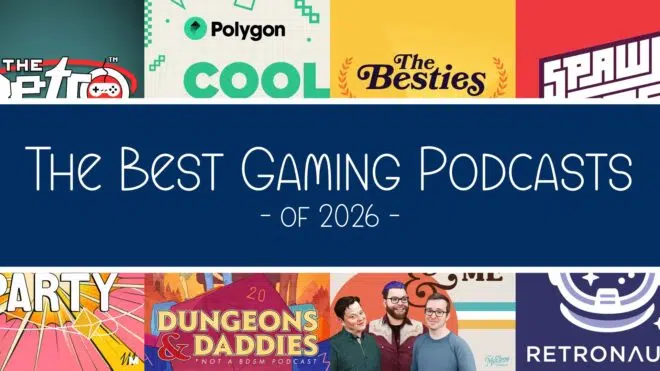
Your Listening Guide to the Best Gaming Podcasts in 2026

Do we give video games enough credit? I’m not sure we do.
Back when admitting you played Dungeons & Dragons could get you weird looks at parties, not Olympic gold medals.
Speaking of which, did you catch Amber Glenn opening Magic: The Gathering booster packs at the 2026 Winter Olympics closing ceremony?
An elite athlete, celebrating her gold medal by cracking MTG packs on international television.
That’s when you know gaming culture has truly arrived.
But here’s the thing about gaming that nobody talks about enough: the best games aren’t defined by their graphics or hardware requirements.
They’re defined by their stories.
You can have all the ray tracing and 4K textures in the world, but if your narrative is garbage, you’ve got garbage.
That’s why a simple game of D&D with a great dungeon master, a pad of paper, and some dice can be the best time you’ll ever spend gaming.
It’s all about the storytelling.
And that’s exactly what separates great gaming podcasts from the mediocre ones.
The global games market reached $197 billion in 2025, and gaming culture is everywhere now.
It’s lush, it’s ripe, and it can be a cheap distraction from everything going on around us.
So when you’re looking for gaming podcasts, you need shows that understand what makes games actually good: the stories, the community, the shared experiences.
Not just spec sheets and frame rates.
This guide covers 15 gaming podcasts organized by what you actually play—video games, tabletop RPGs, retro classics, industry news, and pure comedy.
I’m leaning heavy on independent podcasts (12 of the 15) because that’s where you find the authentic voices.
Real gamers talking to real gamers, no corporate filter.
Each podcast includes episode length, release frequency, and who it’s best for.
No fluff, no filler—just the shows worth your time.
Let’s find your perfect gaming podcast match.
How to Use This Guide
This isn’t your typical “best of” list that throws 50 podcasts at you with two-sentence descriptions.
I’ve organized 15 gaming podcasts into five categories based on what you actually play:
- Video Games (5 podcasts)
- Tabletop & RPG (4 podcasts)
- Retro Gaming (2 podcasts)
- Industry News (2 podcasts)
- Comedy & Entertainment (2 podcasts)
Each podcast gets real coverage: who hosts it, how long episodes run, how often they publish, and most importantly—who it’s actually for.
12 of these 15 are independent podcasts.
Why does that matter?
Because indie shows give you unfiltered perspectives from people who game because they love it, not because it’s their corporate assignment.
If you’re like me and your gaming tastes span multiple categories (I’ve gone from D&D campaigns to modern AAA titles), sample across sections.
The beauty of podcasts is you can try a few episodes risk-free.
Find the shows that match your gaming style and storytelling preferences.
Video Game Podcasts: Where Graphics Meet Narrative
Video game podcasts are everywhere, but most of them focus on the wrong things.
They obsess over specs, frame rates, and whether the latest GPU can handle ultra settings.
That stuff matters, sure.
But it’s not what makes a game memorable.
The best video game podcasts understand that narrative drives everything.
They talk about games as storytelling experiences, not just technical achievements.
Here are five shows that get it right.
What’s Good Games
Hosts: Andrea Rene, Brittney Brombacher, Riana Manuel-Peña
Episode Length: 60-90 minutes
Frequency: Weekly
Indie/Studio: Independent
What’s Good Games brings something the gaming podcast space desperately needed: women’s perspectives without the “women in gaming” label slapped on as a gimmick.
Andrea, Brittney, and Riana cover the full spectrum of gaming news, reviews, and industry analysis with the kind of depth you’d expect from people who’ve been in the trenches for years.
They’re not here to prove they belong… they already do.
The show balances accessibility for casual gamers with enough insider knowledge to keep hardcore fans engaged.
What sets them apart is their focus on narrative and character development in games.
They’ll spend 20 minutes dissecting why a game’s story works or doesn’t, which is exactly the kind of analysis most gaming podcasts skip.
Who it’s for: Gamers tired of bro culture who want thoughtful analysis without sacrificing entertainment value.
While the show has wound down to its conclusion, this remains one of the best archive of video game content out there.
Spawn On Me
Hosts: Kahlief Adams, Cicero Holmes
Episode Length: 90-120 minutes
Frequency: Weekly
Indie/Studio: Independent
Kahlief and Cicero created Spawn On Me to fill a gap they saw in gaming media: Black gamers’ perspectives on games, culture, and the industry.
The show goes deep on how games intersect with broader cultural conversations.
They’re not afraid to call out industry problems while still celebrating what makes gaming great.
Episodes run long (often over two hours), but they earn that runtime with substantive discussions.
You’re not getting surface-level hot takes—you’re getting thoughtful analysis from people who understand gaming as both entertainment and cultural artifact.
The chemistry between Kahlief and Cicero makes even their tangents worth listening to.
Who it’s for: Gamers seeking diverse voices and cultural context beyond “is this game fun?”
Into the Aether
Hosts: Brendon Bigley, Stephen Hilger
Episode Length: 60-90 minutes
Frequency: Weekly
Indie/Studio: Independent
If you’re the kind of gamer who thinks about games the way English majors think about novels, Into the Aether is your show.
Brendon and Stephen approach video games as literary texts worth serious analysis on their long running show.
They discuss narrative structure, character arcs, thematic elements, and how games use interactivity to tell stories in ways other media can’t.
This isn’t pretentious academic nonsense—it’s two people who genuinely love games exploring what makes them work as storytelling vehicles.
They cover everything from indie darlings to AAA blockbusters, always with an eye toward narrative craft.
Episodes feel like the best kind of book club discussion, except about games.
Who it’s for: Story-first gamers who want to understand why certain games stick with them long after the credits roll.
The Besties
Hosts: Griffin McElroy, Justin McElroy, Chris Plante, Russ Frushtick
Episode Length: 45-60 minutes
Frequency: Weekly
Indie/Studio: Independent
The Besties takes a simple concept—four friends arguing about which game is best each week—and turns it into one of the most consistently entertaining gaming podcasts out there.
The format is straightforward: each host brings a game, they discuss all of them, then vote on which one “wins.”
What makes it work is the chemistry between the hosts and their genuine enthusiasm for games.
These aren’t cynical industry veterans phoning it in—they’re people who still get excited about discovering great games.
The show skews toward accessible, fun discussions rather than deep critical analysis.
That’s not a weakness; it’s a feature.
Sometimes you just want to hear people who love games talk about games they love.
Who it’s for: Casual to mid-core gamers who want recommendations without homework.
Giant Bombcast
Hosts: Jeff Grubb, Jan Ochoa, Tam Moore, Bailey Meyers
Episode Length: 120-180 minutes
Frequency: Weekly
Indie/Studio: Studio (Giant Bomb)
Giant Bomb has been a fixture in gaming media since 2008, and the Bombcast remains one of the most comprehensive gaming news podcasts available.
Episodes run long (often three hours), covering everything from major industry news to obscure game releases.
The current crew brings fresh energy while maintaining the site’s tradition of irreverent, knowledgeable gaming discussion.
Jeff Grubb’s industry connections mean you’re getting insider perspectives on what’s actually happening behind the scenes.
The show’s length is both its strength and weakness—you’re getting exhaustive coverage, but you need to commit serious time.
Think of it as the gaming podcast equivalent of a Sunday newspaper: comprehensive, authoritative, and best consumed when you’ve got time to spare.
Who it’s for: Hardcore gaming news junkies who want to know everything happening in the industry.
Tabletop & RPG Podcasts: Where Storytelling Began
This is where I need to get personal for a second.
When I was coming up, it was basically a Lorde song. No postcode envy… we didn’t come from money.
That meant we didn’t have all the super fancy cutting edge video games as soon as they were released. That said, gaming isn’t always about pixels and processors.
More often, what makes a good game, is a good story. You have no idea how much fun a Dungeons and Dragons campaign with a good storyteller and a simple die can be.
25 years later I still remember some of the weeks longs journeys my elf would go on with his bretheren. It was storytelling, world building, and math. It was community.
That it stuck with me this long says something about the core tenants of what makes a good game.
The global TTRPG market reached $1.9-2.0 billion in 2024, and tabletop gaming is experiencing a genuine renaissance.
But the best tabletop podcasts aren’t just recording game sessions—they’re creating narrative experiences that rival any scripted fiction.
Here are four shows that prove actual play podcasts are storytelling masterclasses.
The Adventure Zone
Hosts: Griffin McElroy, Justin McElroy, Travis McElroy, Clint McElroy
Episode Length: 60-90 minutes
Frequency: Bi-weekly
Indie/Studio: Independent
The Adventure Zone is what happens when a family of naturally funny people decides to play D&D together and record it.
What started as a goof has evolved into one of the most beloved actual play podcasts in existence.
Griffin serves as DM while his brothers Justin and Travis, plus their dad Clint, play characters who somehow become deeply compelling despite starting as jokes.
The show’s first campaign (Balance) is a masterclass in long-form storytelling.
Griffin weaves together comedy, genuine emotion, and epic fantasy in ways that shouldn’t work but absolutely do.
Later campaigns experiment with different game systems and tones, but they all share the same core: family dynamics that make every moment feel authentic.
The Adventure Zone proves you don’t need professional voice actors or complex production to create something special.
You just need people who care about each other telling a story together.
Who it’s for: D&D newcomers and story lovers who want actual play that’s accessible and emotionally resonant.
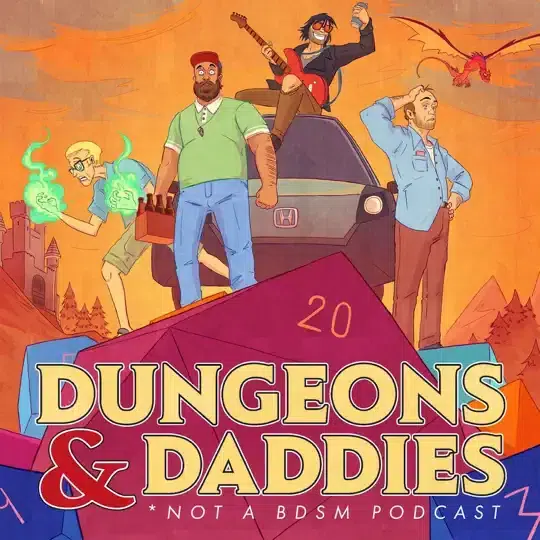
Dungeons & Daddies
Hosts: Anthony Burch, Beth May, Freddie Wong, Matt Arnold, Will Campos
Episode Length: 60-75 minutes
Frequency: Weekly
Indie/Studio: Independent
Don’t let the title fool you—Dungeons & Daddies is a podcast about four dads from our world who get transported to the Forgotten Realms on a quest to rescue their sons.
It’s not a BDSM podcast (they clarify this constantly).
What makes D&D Daddies special is how it subverts typical D&D tropes while still honoring what makes the game great.
The comedy is sharp and the characters are ridiculous, but the show never loses sight of its emotional core.
These dads are trying to save their kids while grappling with their own failures as parents.
That tension between absurdist humor and genuine heart is what keeps people coming back.
Anthony Burch’s DMing style encourages chaos while maintaining narrative momentum.
The result is a show that feels spontaneous and tightly crafted at the same time.
Who it’s for: Comedy fans who want actual play that doesn’t sacrifice storytelling for jokes.
Join the Party
Hosts: Eric Silver, Brandon Grugle, Amanda McLoughlin, Julia Schifini
Episode Length: 60-90 minutes
Frequency: Weekly
Indie/Studio: Independent
Join the Party is the most beginner-friendly actual play podcast on this list, and that’s a compliment.
Eric, Brandon, Amanda, and Julia created a show that welcomes new TTRPG players while still offering depth for veterans.
They explain mechanics when relevant, discuss their creative choices openly, and build a world that feels lived-in and accessible.
The show’s commitment to inclusive storytelling shows up in both the characters and the world-building.
You’re getting diverse representation that feels natural, not performative.
What really sets Join the Party apart is the world they’ve created: a superhero universe where powers come from drinking special beverages.
It’s weird, it’s creative, and it gives them endless storytelling possibilities.
The cast’s chemistry makes even combat encounters feel like collaborative storytelling rather than dice-rolling exercises.
Who it’s for: New TTRPG players and anyone who wants actual play that prioritizes world-building and character development.
Critical Role
Hosts: Matthew Mercer, Laura Bailey, Travis Willingham, Sam Riegel, Liam O’Brien, Marisha Ray, Ashley Johnson, Taliesin Jaffe
Episode Length: 180-240 minutes (3-4 hours)
Frequency: Weekly
Indie/Studio: Studio (Critical Role Productions)
Critical Role is the 800-pound gorilla of actual play podcasts.
When professional voice actors play D&D together, you get performances that elevate the medium.
Matthew Mercer’s DMing is legendary for good reason—he creates rich, detailed worlds and NPCs that feel like fully realized characters.
The cast brings theatrical training to their character work, resulting in moments of genuine drama and comedy.
Here’s the catch: episodes run 3-4 hours, and campaigns span hundreds of episodes.
This is a serious time investment.
You’re not casually sampling Critical Role—you’re committing to an epic fantasy saga that rivals any novel series.
The production quality is professional-grade, with multiple cameras, sound design, and visual effects.
It’s actual play as prestige television.
Who it’s for: Hardcore D&D fans with time to invest who want epic campaigns with professional-level performances.
Retro Gaming Podcasts: Nostalgia with Substance
Retro gaming podcasts walk a fine line between nostalgia and gatekeeping.
The best ones celebrate classic games while making them accessible to younger gamers discovering them for the first time.
They understand that retro gaming isn’t just about remembering the past—it’s about preserving and contextualizing gaming history.
Here are two shows that get it right.
Retronauts
Hosts: Bob Mackey, Jeremy Parish
Episode Length: 60-90 minutes
Frequency: Weekly
Indie/Studio: Independent
Retronauts is gaming history class taught by people who lived through it and actually did their homework.
Bob Mackey and Jeremy Parish don’t just reminisce about old games—they analyze them within their historical and cultural context.
Each episode deep-dives into a specific game, series, or gaming era with the kind of research that would make academics jealous.
They interview developers, examine design decisions, and explore how games influenced each other.
What makes Retronauts essential is its commitment to preservation.
Gaming history is fragile, and shows like this ensure important stories don’t get lost.
The tone is accessible without being condescending.
They’re not gatekeeping retro gaming—they’re inviting you to understand why these games mattered and still matter.
Who it’s for: Gaming historians and anyone who wants to understand the medium’s evolution beyond “remember when games were hard?”
The Retro Hour
Hosts: Dan Wood, Darren McCarthy
Episode Length: 90-120 minutes
Frequency: Weekly
Indie/Studio: Independent
The Retro Hour takes a different approach to retro gaming: interviews with the people who made gaming history.
Dan and Darren have talked to everyone from legendary developers to hardware engineers to gaming journalists who covered the industry’s early days.
These aren’t surface-level “remember the good old days” conversations.
They’re deep dives into creative processes, technical limitations, and industry dynamics that shaped gaming.
You’re getting firsthand accounts from people who were there.
The show also covers gaming preservation efforts, which matters more than most people realize.
Old games are disappearing, and organizations working to preserve them need visibility.
The Retro Hour gives them that platform.
Who it’s for: Collectors, preservation advocates, and anyone interested in gaming’s untold stories.
Industry News & Analysis Podcasts
Gaming is a massive industry with complex business dynamics, labor issues, and cultural impact.
The best industry podcasts go beyond “here’s what got announced this week” to explore what’s actually happening behind the scenes.
These two shows bring investigative journalism and cultural criticism to gaming coverage.
Triple Click
Hosts: Jason Schreier, Maddy Myers, Kirk Hamilton
Episode Length: 60-75 minutes
Frequency: Weekly
Indie/Studio: Independent
When Bloomberg’s Jason Schreier—the journalist who’s broken more gaming industry stories than anyone else—hosts a podcast, you listen.
Triple Click combines Schreier’s investigative reporting with Maddy Myers’ cultural criticism and Kirk Hamilton’s musical expertise.
The result is gaming industry coverage that actually matters.
They don’t just report news—they explain what it means.
When a studio shuts down or a game gets delayed, Triple Click digs into the labor conditions, business decisions, and industry trends that led there.
The show also features “One More Thing” segments where each host shares something they’re into, gaming-related or not.
It’s a nice palate cleanser after heavy industry discussions.
Who it’s for: Industry watchers and news junkies who want context beyond press releases.
Waypoint Radio
Hosts: Patrick Klepek, Rob Zacny, Cado Eulalio, Renata Price
Episode Length: 90-120 minutes
Frequency: Weekly
Indie/Studio: Studio (Vice Media)
Waypoint Radio brings progressive politics and cultural criticism to gaming coverage in ways that make some gamers uncomfortable.
That’s exactly why it’s valuable.
Patrick, Rob, Cado, and Renata don’t shy away from discussing how games intersect with social issues, labor rights, and representation.
They’re not here to tell you games are just entertainment—they’re here to examine games as cultural artifacts that reflect and shape society.
The show covers news, reviews, and deep dives into specific games or industry topics.
Episodes run long because they’re actually saying something substantive.
If you want gaming coverage that challenges you to think critically about the medium, Waypoint Radio delivers.
Who it’s for: Gamers interested in social issues and cultural criticism alongside industry news.
Comedy & Entertainment Gaming Podcasts
Sometimes you don’t want deep analysis or industry insights.
Sometimes you just want to laugh about games with people who get it.
Gaming can be a cheap distraction from everything going on around us, and these comedy podcasts embrace that without apology.
They prove that comedy doesn’t mean shallow—you can be funny and still care deeply about games.
My Brother, My Brother and Me
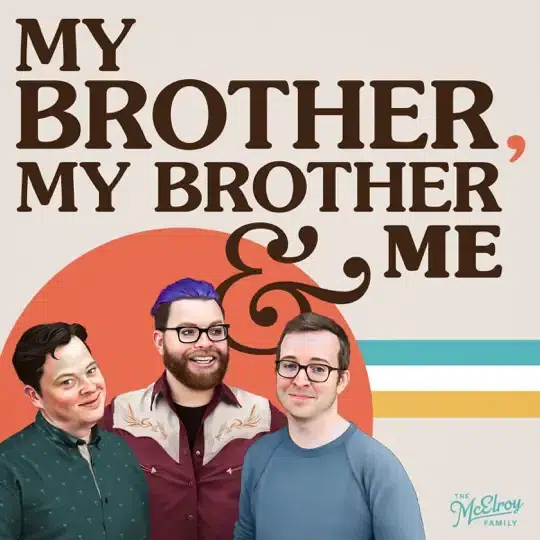
Hosts: Justin McElroy, Travis McElroy, Griffin McElroy
Episode Length: 60-75 minutes
Frequency: Weekly
Indie/Studio: Independent
My Brother, My Brother and Me isn’t technically a gaming podcast (we’ve covered it before in our Podcasts like Normal Gossip post) it’s an “advice show for the modern era.”
But the McElroy brothers are so deeply embedded in gaming culture that it bleeds into everything they do.
The show’s absurdist humor and genuine affection for each other creates something special.
They take listener questions (real and Yahoo Answers-sourced) and riff on them until the original question becomes irrelevant.
Gaming references pop up constantly because that’s how the brothers communicate.
If you’re already a fan of The Adventure Zone, MBMBaM shows you where that family dynamic comes from.
It’s gaming-adjacent comedy that celebrates nerd culture without mocking it.
Who it’s for: Comedy fans and McElroy family enthusiasts who want laughs with heart.
Cool Games Inc.
Hosts: Griffin McElroy, Nick Robinson
Episode Length: 45-60 minutes
Frequency: Irregular (archived episodes available)
Indie/Studio: Independent
Cool Games Inc. ran from 2016-2017, but the archived episodes remain some of the funniest gaming comedy ever recorded.
The premise: listeners submit terrible video game ideas, and Griffin and Nick workshop them into slightly less terrible (but infinitely more entertaining) concepts.
What starts as “what if Pokémon but with guns” becomes a 20-minute improv session that somehow results in a coherent (if absurd) game pitch.
The show ended when Nick Robinson left Polygon, but the back catalog is worth exploring.
It’s a masterclass in creative comedy and a reminder that some of the best gaming content comes from people just having fun with the medium.
Who it’s for: Creative types and comedy nerds who want to hear what happens when smart, funny people riff on game design.
The Storytelling Test: What Makes a Gaming Podcast Great
After covering 15 gaming podcasts across five categories, here’s what separates the great ones from the mediocre:
They tell stories, not just recite facts.
The best gaming podcasts understand that games are narrative experiences.
They don’t just list features or review scores—they explore what makes games resonate emotionally.
They respect your time.
Whether an episode runs 45 minutes or three hours, great podcasts earn that runtime.
You’re not getting filler—you’re getting substance.
They bring authentic voices.
This is why 12 of these 15 podcasts are independent.
Indie shows give you unfiltered perspectives from people who game because they love it.
No corporate messaging, no sponsored talking points—just real gamers talking to real gamers.
They understand the D&D lesson.
A great dungeon master with paper and dice creates better experiences than flashy production with no substance.
The same applies to podcasts.
Chemistry, knowledge, and genuine passion matter more than expensive equipment.
Gaming culture is lush and ripe with stories worth telling.
The podcast listenership grew 6.8% to 584 million globally in 2025, and gaming podcasts are a huge part of that growth.
But not all gaming podcasts are created equal.
The ones worth your time are the ones that understand what made you fall in love with games in the first place: the stories, the community, the shared experiences.
Find the podcasts that match your gaming style and storytelling preferences.
Start Listening, Start Playing
You’ve now got 15 gaming podcasts organized by what you actually play.
12 of them are independent shows bringing authentic gamer voices without corporate filters.
Here’s what to do next:
Pick one podcast from this list that matches your gaming interests.
If you’re into video games, start with What’s Good Games or Into the Aether.
If tabletop is your thing, try The Adventure Zone or Dungeons & Daddies.
Retro gaming fan? Retronauts has you covered.
Want industry news? Triple Click delivers.
Just want to laugh? My Brother, My Brother and Me will do the trick.
Sample a few episodes and see what clicks.
Gaming culture has evolved from niche hobby to mainstream phenomenon. We saw that when Amber Glenn opened MTG packs at the Olympics.
But the core of gaming culture remains the same: great stories, shared experiences, and community.
The best gaming podcasts reflect that richness.
They’re not just talking about games. They’re also celebrating what makes gaming culture special.
Find your storytelling match and start listening.
We’re all gamers, and there’s a podcast out there for every type of player.
FAQ
What are the best gaming podcasts for beginners?
The best gaming podcasts for beginners are The Besties for video games and The Adventure Zone for tabletop RPGs.
The Besties keeps episodes under an hour and focuses on accessible game recommendations without requiring deep industry knowledge.
The Adventure Zone welcomes new D&D players with family-friendly humor and clear explanations of game mechanics.
Both shows prioritize entertainment over insider knowledge, making them perfect entry points.
How long are most gaming podcast episodes?
Gaming podcast episodes typically range from 45 minutes to 3 hours depending on format and focus.
Video game news podcasts like Giant Bombcast run 2-3 hours for comprehensive coverage.
Actual play podcasts like Critical Role can hit 3-4 hours per episode.
Comedy and discussion shows like The Besties or Cool Games Inc. usually stay under 60-75 minutes.
Industry analysis podcasts like Triple Click average 60-90 minutes.
Choose based on your available listening time.
Are there gaming podcasts for tabletop games like D&D?
Yes, tabletop and RPG podcasts are one of the fastest-growing categories in gaming podcasts.
The Adventure Zone, Dungeons & Daddies, Join the Party, and Critical Role all feature actual play D&D campaigns with different tones and approaches.
The global TTRPG market reached $1.9-2.0 billion in 2024, and actual play podcasts are a major driver of that growth.
These shows prove that tabletop gaming podcasts can be as compelling as any scripted fiction.
What’s the difference between indie and studio gaming podcasts?
Independent gaming podcasts are created by individuals or small teams without corporate backing, giving them editorial freedom and authentic voices.
Studio podcasts are produced by media companies with professional resources but potential corporate influence.
Indie podcasters value passion over profit according to the 2025 Independent Podcaster Report.
12 of the 15 podcasts in this guide are independent because they offer unfiltered perspectives from people who game because they love it, not because it’s their job.
How often do gaming podcasts release new episodes?
Most gaming podcasts release weekly, though frequency varies by show type and production complexity.
News-focused podcasts like Giant Bombcast and Triple Click publish weekly to stay current.
Actual play podcasts like The Adventure Zone release bi-weekly due to longer production times.
Comedy shows like My Brother, My Brother and Me maintain weekly schedules.
Some shows like Cool Games Inc. have irregular schedules or are archived with no new episodes.
Check individual podcast feeds for current release schedules.
Can I find gaming podcasts about retro/classic games?
Yes, retro gaming podcasts like Retronauts and The Retro Hour specialize in classic games and gaming history.
These shows go beyond nostalgia to provide historical context, developer interviews, and preservation advocacy.
Retronauts deep-dives into specific games and eras with academic-level research.
The Retro Hour features interviews with legendary developers and hardware engineers who made gaming history.
Both shows make retro gaming accessible to younger players discovering classics for the first time while satisfying longtime fans.

Previous Story
20 Best Basement Yard Episodes When You Need to Laugh at Chaos
Next Story
Find Your Podcasts to Fall Asleep to in 2026