



Ever check your bank account and wonder if you should laugh or cry?
You’re not alone.
With 65% of us losing sleep over AI stealing our jobs and two-thirds of Gen Z already planning their next career move, economic anxiety is the uninvited roommate we’re all stuck with in 2025.
I started this list because I needed it myself.
When my industry “restructured” (corporate speak for “we’re replacing you with an algorithm”), I went from doom scrolling X (ugh) to doom scrolling job boards.
Self development podcasts became my lifeline.
Not the toxic positivity kind that tell you to manifest millions while doing yoga at sunrise.
The best self development podcasts, the real ones. With practical advice from people who’ve navigated economic whiplash and lived to tell about it. Or podcast about it.
Like actors rewatching shows. So, a grain of salt, please.
These 20 podcasts won’t magically fix the economy. They aren’t going to guarantee you’ll never hear “we’re going in a different direction” from your boss. That’s not the point.
But they will give you tools to build resilience, spot opportunities, and maybe even sleep through the night again.
Whether you’re sweating about career transitions, building a side hustle before your main hustle disappears, or just trying to keep your mental health intact while inflation eats your lunch money – there’s something here for you.
Let’s dive in.
Why Self Development Podcasts Matter in 2025’s Economy
Remember when “career planning” meant picking a lane and staying in it for 40 years?
Yeah, that’s as dead as dial-up internet.

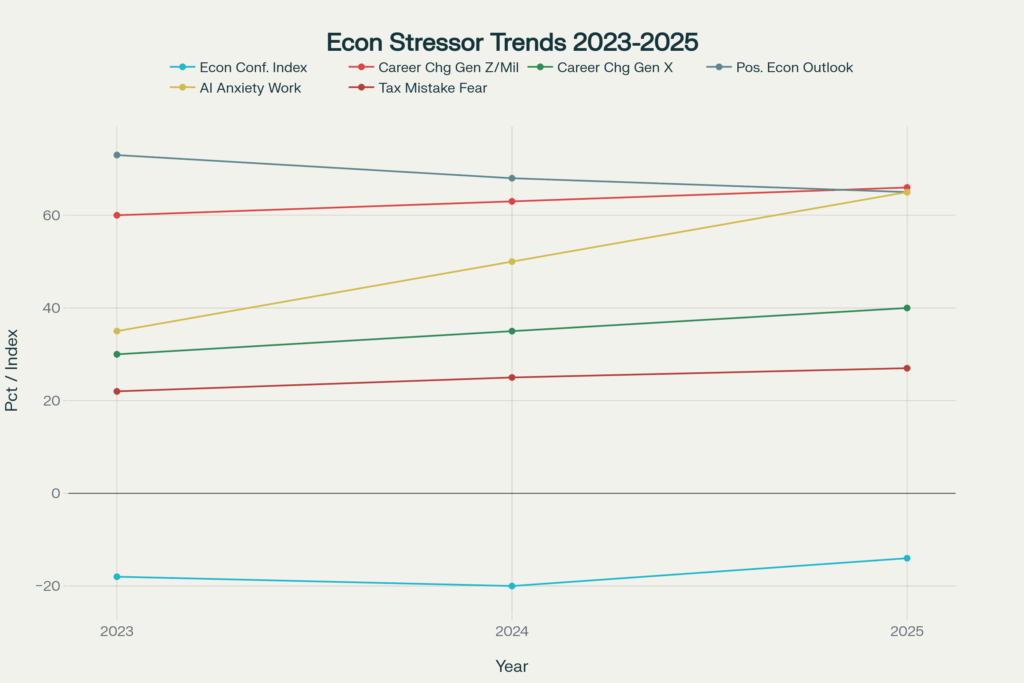
The numbers tell the story none of us want to hear: AI anxiety jumped from 35% to a whopping 65% in just two years.
Two-thirds of my fellow millennials are updating their resumes right now.
And Gallup’s economic confidence index has been in the basement longer than that exercise equipment you bought during lockdown.
This isn’t just regular uncertainty – it’s uncertainty on steroids.
Self-development podcasts aren’t just nice-to-have background noise anymore.
They’re survival tools.
When the job market transforms faster than you can say “ChatGPT wrote my resume,” these audio lifelines connect you with people who’ve already navigated the chaos.
I’ve listened to episodes during panic attacks about my dwindling savings.
I’ve played them while figuring out how to explain a six-month “career gap” that was really just me trying not to have a breakdown.
The best part? Unlike that$2,000 course promising to make you “AI-proof” (spoiler: nothing is), podcasts are free.
You can absorb career-saving advice while commuting, cooking, or pretending to listen during your third pointless Zoom meeting of the day.
They’re like having mentors who don’t charge consulting fees or expect you to buy them coffee.
In an economy where everyone’s telling you to “upskill or perish,” podcasts let you learn without going further into debt.
And when the rules of work change weekly, having fresh insights delivered automatically beats reading last year’s career advice book.
So no, podcasts won’t fix the economy.
But they might just help you stay afloat while the rest of us figure out what the hell we’re doing.
How to Choose the Right Self Development Podcast for Your Needs
Let’s be honest – there are more self-development podcasts out there than flavors at those fancy ice cream shops where you need a dictionary to order.
And just like that$15 scoop of lavender-honey-cardamom whatever, not every podcast is worth your precious time.
Here’s how I filter through the noise:
Get clear on your actual problem.
Are you terrified of AI making your job obsolete?
Drowning in student debt while inflation eats your paycheck?
Or maybe you’re just tired of having an existential crisis every Sunday night before work?
Different problems need different voices.
Don’t waste time on cryptocurrency tips if you’re trying to figure out how to ask for a raise without getting fired.
Trust your gut about the host.
Some hosts make me want to throw my phone across the room within 30 seconds.
Others feel like that friend who tells you the truth even when it hurts.
If someone’s voice, laugh, or catchphrase makes you cringe, move on.
Life’s too short and the economy’s too unstable to force yourself through content that irritates you.
Check their credentials – but not too closely.
I don’t need advice on navigating layoffs from someone who’s never been laid off.
But I also don’t need a PhD in psychology to tell me how to manage stress.
Look for hosts who’ve actually been through what you’re facing.
The best financial advice I ever got came from someone who once had to choose between paying rent and buying groceries – not from a trust fund kid who “built” their empire with a small million-dollar loan.
Balance inspiration with action steps.
If you finish an episode feeling pumped but have no idea what to do next, that’s just emotional sugar.
The best podcasts leave you with both hope AND homework.
I need at least one thing I can try today, not vague promises about “unlocking my potential.”
Don’t binge.
I once listened to 12 episodes of a productivity podcast while lying in bed eating chips.
The irony was not lost on me.
Pick one or two shows that resonate, listen consistently, and actually implement something before adding more to your feed.
Remember – the goal isn’t to become a self-development podcast connoisseur.
It’s to get your life together enough that you can sleep at night despite gestures broadly at everything.
Best 20 Self Development Podcasts for Economic Resilience in 2025
Career Transition & AI Adaptation
1. WorkLife with Adam Grant

Adam Grant digs into what makes work not completely suck.
He talks to people who’ve built careers that don’t make them want to scream into a pillow every night.
This one’s for you if you’re wondering if your soul-crushing job is normal or if better workplaces actually exist.
Last week, I listened to his episode on “quiet quitting” while actively quiet quitting during a meeting.
The irony wasn’t lost on me, but his conversation with a former burnout victim who restructured her entire department around 4-day workweeks gave me hope that work doesn’t have to be a slow death march.
2. The Jordan Harbinger Show
Jordan interviews everyone from FBI negotiators to con artists about the skills that kept them alive, successful, or out of prison.
Perfect for anyone who needs practical people skills to navigate office politics or career changes.
When my boss took credit for my project, I used a technique from Jordan’s interview with an FBI hostage negotiator.
Instead of burning bridges (my first instinct), I had a conversation that ended with my partner actually apologizing.
I’m still shocked it worked.
3. Beyond the To-Do List
Erik Fisher talks to real people about productivity that doesn’t require becoming a robot.
This is your podcast if you’re drowning in tasks while the important stuff never gets done.
After my third consecutive 60-hour week led to a panic attack in the company bathroom, Erik’s episode on “productive boundaries” helped me realize I wasn’t failing at time management – I was failing at saying no.
I’ve since cut my workload by 30% and somehow get more done.
4. Coaching for Leaders
Dave Stachowiak teaches leadership skills without the corporate buzzword bingo.
Listen if you’ve been thrust into management with zero training or want to lead without becoming the boss you used to hate.
When my team doubled overnight after layoffs hit our department, Dave’s episode on “managing through uncertainty” saved me from a complete meltdown.
His advice on transparent communication prevented the remaining team from updating their resumes en masse.
5. Soft Skills Engineering
Two software engineers answer career questions with brutal honesty and dad jokes.
Perfect for tech workers navigating an industry where the ground shifts daily.
Their episode on “negotiating when you’re terrified” gave me the exact script I needed to counter a lowball offer after my company “rightsized.”
I got better benefits (in terms of work/life balance) because I didn’t panic-accept the first number.
Oh, and speaking of rightsized? These are bite sized at half an hour.
Financial Resilience & Entrepreneurship
6. Smart Passive Income
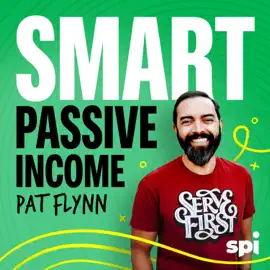
Pat Flynn breaks down how to build income streams that don’t require selling your soul or working 24/7.
This is your show if you’re tired of trading time for money or want insurance against the next round of layoffs.
After hearing Pat’s interview with a teacher who built a$50K side business creating lesson plans, I turned my hobby of fixing old electronics into a weekend repair service.
It now covers my rent when my freelance work dries up.
7. The Marie Forleo Podcast
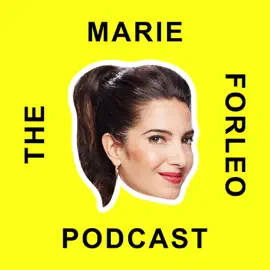
Marie offers no-BS advice on building a business or career that aligns with who you actually are.
Listen if you’re tired of pretending to be someone else at work or dream of turning your skills into something that’s actually yours.
Her episode “Start Before You’re Ready” pushed me to launch my consulting business instead of waiting for the “perfect time.”
There is no perfect time, especially in this economy.
8. The Go-Giver Podcast
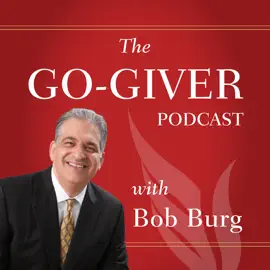
I caught this one back during COVID lockdown. Walking down empty streets in a silent neighborhood with the Go-Giver Podcast in my ears.
It’s nearly 200 episodes of archives at this point, but certainly worth listening to.
Bob Burg interviews people who’ve built success through generosity rather than cutthroat tactics.
Great for anyone suspicious that “nice guys finish last” in business.
When I was tempted to undercut a competitor to win a client, Bob’s interview with a CEO who built a million-dollar business through radical transparency made me reconsider.
I ended up collaborating with my “competitor” instead, and we both made more money.
9. Being Boss
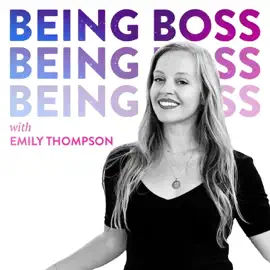
Emily Thompson and Kathleen Shannon (in the beginning) talk about the messy reality of being your own boss.
Perfect for freelancers, side-hustlers, or anyone contemplating telling their manager to shove it.
Their episode on “feast or famine cycles” helped me create a financial buffer system that’s saved my ass during three separate client droughts.
I no longer panic when invoices are paid late. Well, less.
10. The Ed Mylett Show
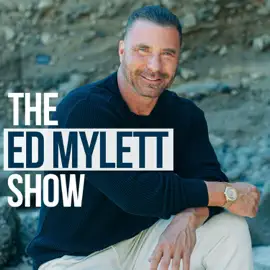
Ed interviews high performers about their lowest moments and how they climbed back.
This one’s for you if you need a kick in the pants delivered with genuine empathy.
After being rejected for a promotion I’d worked 70-hour weeks to earn, Ed’s interview with an entrepreneur who failed spectacularly before building a 9-figure business gave me perspective.
I realized the rejection wasn’t the end – it was pushing me toward something better.
Sometimes we just need a catalyst.
Mental Resilience & Stress Management
11. The Hardcore Self Help Podcast
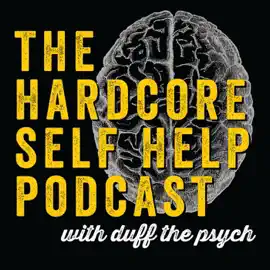
Dr. Robert Duff tackles mental health issues without the clinical jargon or toxic positivity.
Essential listening if anxiety, depression, or burnout are your constant companions in this economy.
His episode on “financial anxiety” normalized exactly what I was feeling after my emergency fund disappeared during a three-month job search.
The practical grounding techniques have talked me down from several 3 AM panic spirals about becoming homeless.
12. Huberman Lab

Dr. Andrew Huberman explains how your brain works and how to make it work better, backed by actual science.
Perfect for anyone who wants to optimize their mental performance without falling for pseudoscience.
His episode on stress management gave me a simple breathing technique that’s more effective than the anxiety medication I can no longer afford since my insurance changed.
I use it before job interviews and difficult client calls.
13. Unlocking Us with Brené Brown
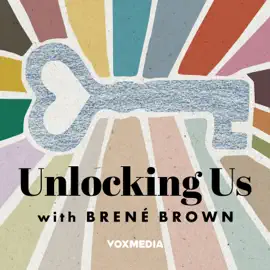
Brené dives into the messy human emotions we’re all feeling but pretending we’re not.
Listen if you’re tired of pretending everything’s fine when it’s clearly not.
Her conversation about “comparative suffering” helped me stop dismissing my own economic anxiety just because “others have it worse.”
I finally gave myself permission to acknowledge how scared I am about the future without feeling guilty.
14. Happier with Gretchen Rubin
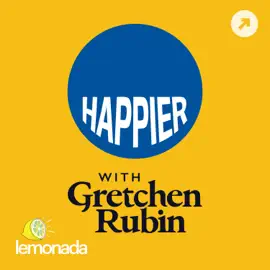
Gretchen and her sister Elizabeth share simple ways to make daily life less overwhelming.
This is your podcast if you need practical happiness hacks for surviving economic uncertainty.
Their “one-minute rule” (if something takes less than a minute, do it now) has somehow made my apartment cleaner, my email inbox manageable, and my anxiety lower during weeks when everything else feels out of control.
15. Oprah’s Super Soul
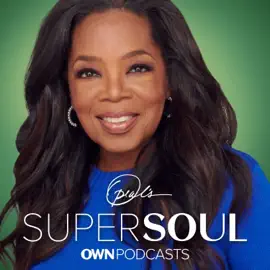
I’m not usually one to promote Oprah. I’m still irritated with Dr. Phil as well as the Secret. They all can’t be winners. But it’s tough to deny she has a gift.
Oprah interviews thought leaders about finding meaning beyond the daily grind.
Perfect for anyone questioning their purpose after a layoff or career disappointment.
When I was debating taking a soul-crushing job just for the paycheck, her interview with a former executive who left corporate America to start a nonprofit gave me courage to hold out for something aligned with my values.
I found a better-fitting role two weeks later. It was a different sales job that was a bummer. But it was better.
Motivation & Mindset Shifts
16. The Tony Robbins Podcast
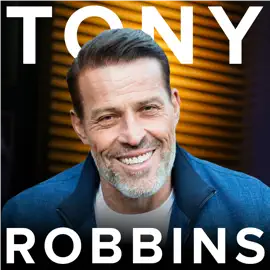
Tony delivers high-energy advice on breaking through limitations and taking control of your life.
Listen if you need someone to believe in your potential when you’ve stopped believing in it yourself.
His episode on “financial freedom” pushed me to finally tackle my debt instead of hiding from it.
This isn’t a podcast I can listen to all that frequently. It begins to feel a bit cult like.
But every once in a while? It’s top notch.
17. Motivation with Brendon Burchard
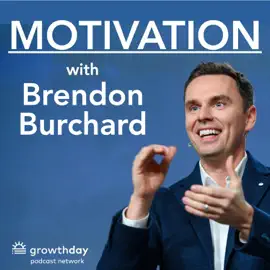
Brendon offers research-backed strategies for high performance without burnout.
This is your show if you want to excel without sacrificing your health or relationships.
His “productivity audit” technique helped me realize I was spending 70% of my time on tasks that generated only 20% of my income.
Restructuring my workday based on his advice improved my perspective on work itself.
18. Jocko Podcast
Former Navy SEAL Jocko Willink applies military discipline to everyday challenges.
Perfect for anyone who needs tough love and extreme ownership during tough times.
When I was tempted to blame the economy, AI, and bad luck for my career setbacks, his episode on “taking ownership” was the cold shower I needed.
I stopped complaining and started focusing on what I could control (stoicism for the win), which led to three new client opportunities.
19. The Art of Charm
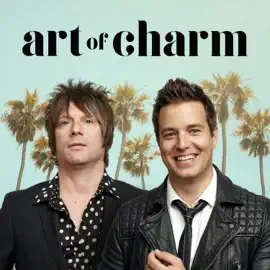
AJ and Johnny teach social skills and relationship building for personal and professional success.
Great for introverts or anyone who finds networking as appealing as a root canal.
Their advice on “conversational threading” transformed my approach to industry events from awkward small talk to meaningful connections.
I have been much more likely to say yes to attendance than a skeptical no after this podcast.
20. The Cathy Heller Podcast
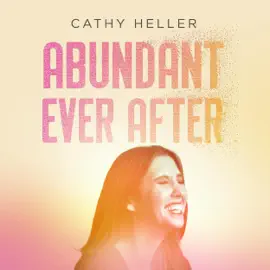
Cathy interviews people who’ve built fulfilling careers by following their curiosity instead of conventional paths.
Listen if you’re questioning whether you need to choose between passion and paying the bills.
Her interview with a former accountant who now makes six figures as a voice-over artist inspired me to leverage my hobby skills into a legitimate side business.
I now earn more from writing gigs than I did at my “stable” office job. Life is too short to build someone else’s dream.
How to Get the Most out of Self Development Podcasts
I’ve been listening to self-development podcasts for years, and I’ll be honest… I used to just play them in the background while doing other things.
Big mistake.
I was consuming content but not actually growing from it. I thought this was efficiency at it’s pinnacle.
When economic anxiety hit me hard last year, I realized I needed to get serious about actually applying what I was learning.
Here’s how I transformed my podcast habit from passive consumption to active growth:
Take Smart Notes (Not Just Listen)
The difference between hearing something interesting and actually changing your life is simple: notes.
I keep a note-taking app or pad of paper with me when I’m listening. Like a college lecture.
I’ve really liked some of the e-ink tablets for this job. I started with the first ReMarkable tablet and have since moved to the Kindle Scribe.
When something hits me, be it a strategy, a quote, an insight—I pause and write it down in my own words.
Not verbatim quotes, per se, but what it means to me specifically to make the contextual connection to my own set of problems. It’s a big set.
This simple habit has completely changed how much I retain and apply.
Try using apps like Snipd or Airr that let you highlight podcast moments and save them with your own thoughts attached.
Create Implementation Triggers
Knowledge without action is just entertainment.
After each podcast episode, I ask myself: “What’s one thing I can do in the next 24 hours with this information?”
Maybe it’s trying a new morning routine from Jocko Podcast.
Or applying a negotiation technique from The Tony Robbins Podcast during my next meeting.
Or practicing a stress-reduction technique from Huberman Lab when I feel overwhelmed about my finances.
The key is creating specific triggers: “When X happens, I’ll try Y technique I learned.”
Join the Conversation
Podcasts aren’t meant to be one-way streets.
I’ve found incredible value in joining online communities around my favorite shows.
Since search has become an AI hellscape, creators worth their salt are creating communities around their podcasts.
I’ve connected with other listeners facing similar economic challenges, and we hold each other accountable, or bitch about circumstances. That can be helpful at times.
Some hosts like Brené Brown even have discussion questions on their websites that help you process what you’ve learned.
Use the “Teach Someone Else” Method
Want to know if you’ve really absorbed something?
Try explaining it to someone else.
After listening to an episode of WorkLife with Adam Grant about negotiating salary in uncertain economic times, I explained the key concepts to my roommate who was job hunting.
The act of teaching forced me to organize the information in my head and identify gaps in my understanding.
Plus, it helped someone else—win-win.
Create a Personal Podcast Curriculum
Not all podcasts serve the same purpose in your growth journey.
I’ve organized my podcast subscriptions into categories that address different areas of my life:
Career Transition (Prof G Pod, Beyond the To-Do List)
Financial Resilience (Smart Passive Income, Jocko Podcast)
Mental Resilience (Unlocking Us, Huberman Lab)
Motivation (The Marie Forleo Podcast, The Ed Mylett Show)
This helps me be intentional about what I listen to based on what I’m struggling with that week.
When job anxiety hits, I know exactly which shows will help.
Practice Podcast Batching
Instead of jumping between different shows and topics, I’ve found it more effective to deep-dive into one area at a time.
For a week, I’ll focus exclusively on financial podcasts.
The next week, mental resilience.
This immersion helps me connect ideas across episodes and develop a more comprehensive understanding.
It’s like the difference between taking a bunch of random college classes versus focusing on your major.
Honorable Mentions Worth Your Time
Beyond our top 20 list, a few other podcasts deserve recognition:
The Prof G Pod with Scott Galloway offers brutally honest takes on career and economic trends.
The Art of Manliness provides practical wisdom on everything from finances to relationships (despite the gendered name, the advice is universal).
For women specifically, The Cathy Heller Podcast offers guidance on building resilience and finding purpose during economic uncertainty.
Turn Listening Into Experiments
The real magic happens when you treat podcast advice as experiments rather than gospel.
When I heard about “fear-setting” on The Tim Ferriss Show, I didn’t just think “that’s interesting.”
I actually tried it—writing down my worst-case scenarios about my financial situation and creating plans to prevent or recover from them.
Not every technique is going to work for you. You’re an individual. Cast a wide net and try some different methods until you find what clicks.
The key is approaching each episode with a scientist’s mindset: “Let me test this hypothesis in my own life.” Despite what you may have heard, the scientific method is still viable.
Remember, these podcasts aren’t just audio entertainment—they’re potential lifelines during economic uncertainty.
But, here’s the thing.
You need to put your knowledge into action.
Don’t make the common mistake of consuming good content and doing nothing with it.
Put in the effort to practice what you learn from these shows and watch your life change before your eyes.
Conclusion
Look, I started listening to these podcasts because I was freaking out about money.
My economic situation in San Diego was brutal.
I’d scroll through job listings feeling that pit in my stomach.
These shows didn’t magically fix my bank account.
But they gave me something I needed more – perspective and actual steps to take.
Some days I’d listen while walking my dog in the park, just letting the ideas sink in.
Other times I’d replay episodes and scribble notes like crazy.
Hot tip, when scribbling vigorously, write in full and complete sentences so you’ll remember what the hell you were talking about when you revisit your notes.
The real game-changer was when I stopped just nodding along and started doing the work.
I built that emergency fund$50 at a time.
I learned to negotiate. Instead of accepting the first offer, I could relate that interview to my longer term goals.
I stopped comparing my life to everyone’s Instagram. We’re living in an extremely polished era that isn’t real.
Hell, the government couldn’t release raw prison footage without running it through Adobe Premiere first.
These podcasts became the counselors who told me what I needed to hear. Rarely what I wanted to hear.
So download a few episodes.
See what resonates.
The economy’s going to economy regardless.
But you don’t have to face it unprepared.
FAQ
How long should I listen to podcasts each day?
It’s going to vary honestly. I’m not going to tell you to carve out two hours every morning like some productivity guru.
Start with 20 minutes during your commute or while doing dishes to get the mood right.
I found my sweet spot is about 45 minutes a day – enough to get the good stuff without feeling overwhelmed. Basically really absorb one podcast.
Quality over quantity. Every time.
Do I need to take notes on every episode?
God no.
Most episodes I just listen and let it marinate.
But when something hits me hard – like when Scott Galloway talked about career moats – that’s when I grab my phone and type out the key points.
Don’t turn this into homework.
What if I don’t understand all the economic terms they use?
Join the club.
I still Bing (or DuckDuckGo) stuff all the time.
The best hosts explain concepts without the jargon, but when they don’t, just pause and look it up.
Or message them on Twitter – many actually respond.
How do I know which podcast is right for me?
Trial and error, friend.
I bounced between probably 30 shows before finding my core rotation.
Give a show 2-3 episodes before deciding.
And pay attention to how you feel afterward – energized or drained?
That tells you everything.
Can these podcasts really help with my specific financial situation?
They’re not financial advisors tailored to your life.
But they’ve helped me tackle credit card debt, negotiate a raise, and figure out whether to rent or buy in this insane housing market.
The principles work even if the details of your situation are different.
What if I don’t have time for podcasts?
You probably do, but just don’t know it.
Driving, walking, folding laundry, grocery shopping – all podcast opportunities.
I knocked out three episodes yesterday just doing errands around North Park.
How current do these podcasts stay with economic trends?
This varies by show and I should note which ones publish most frequently.
Are there any paid subscriptions worth getting?
Some shows offer premium content that’s worth it if you’re really into a particular host.
You might also find getting some books written by the hosts is where you want to allocate a bit of money.
Generally, just start with listening for free. No need to spend money unnecessarily. That’s not what development is all about.
What’s better – interview shows or solo hosts?
Totally depends on your learning style.
I like the back-and-forth of interviews for complex topics.
Solo hosts are great when I want focused, actionable advice without the small talk.
Our list has both styles.
How do I avoid getting overwhelmed with too much information?
Been there.
Pick ONE podcast to start
Listen to their most popular episode.
Implement ONE idea from it.
Then move to the next show.
Information without action is just entertainment.