


Thinking about dropping out of this economy? You’re not alone and this post is for you.
Ready to burn it all down? That’s fire… as the kids might say sometimes.
The best FIRE podcasts cut through the financial BS that keeps most people working until they’re 65.
I’m not talking about feel-good money advice or generic investment tips. I’m talking about shows hosted by people who actually retired in their 30s and 40s – and are willing to share the spreadsheets that made it happen.
Here’s the reality nobody wants to acknowledge: traditional retirement planning is broken in 2025. Social Security is a question mark. Inflation is eating your purchasing power alive. The stock market treats your 401k like a casino chip.
Meanwhile, the FIRE movement has quietly produced thousands of people who escaped the traditional work-until-you-die model. They didn’t win the lottery or inherit trust funds. They figured out the math that most financial advisors won’t teach you.
The problem?
Most FIRE content is either too basic (save money, spend less) or too advanced (tax-loss harvesting strategies for seven-figure portfolios). The podcasts I’m about to recommend solve that problem.
Whether you’re 25 and just discovered that retirement doesn’t have to happen at 65, or you’re 45 and panicking about your financial future, these shows deliver actionable strategies for both demographics.
No fluff. No motivation porn. Just the real tactics that separate early retirees from people who talk about early retirement.

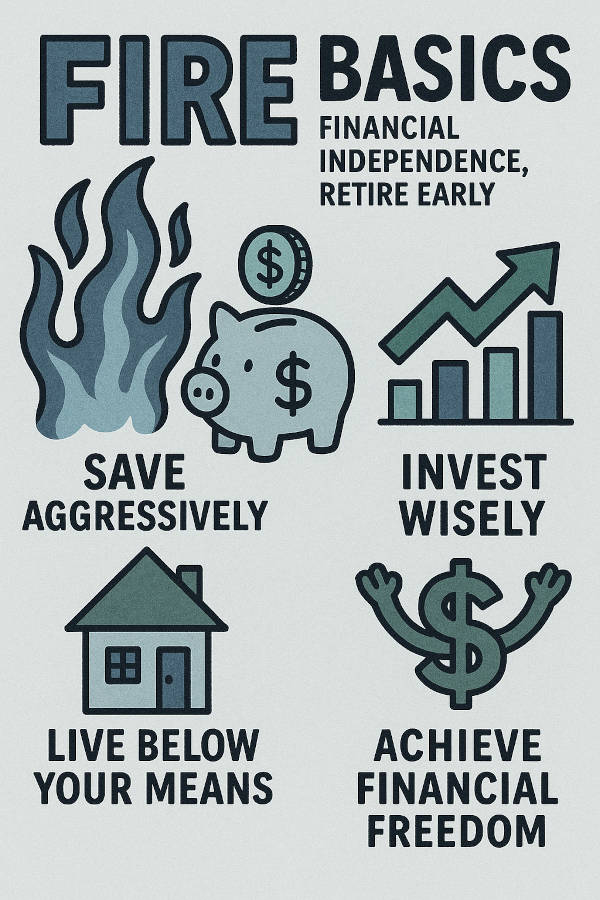
These FIRE podcasts will teach you the difference between lean FIRE, fat FIRE, and coast FIRE. They’ll show you how to calculate your actual withdrawal rate in an inflationary environment. Most importantly, they’ll give you the roadmap for financial independence that works in 2025’s economic chaos.
Ready to stop working for money and start making money work for you? Let’s dive into the shows that’ll actually get you there.
Table of Contents
What Makes a FIRE Podcast Worth Your Time?
Look, the internet is drowning in financial advice.
Every wannabe guru with a microphone thinks they can teach you to retire early.
Most of them are selling you dreams while living in their parents’ basement.
Here’s what separates the real FIRE podcasts from the noise.
First, the hosts actually walked the walk.
They didn’t just read about financial independence in a textbook.
They built their own path to early retirement and can show you the receipts.
Second, they address the math honestly.
Real FIRE podcasts don’t promise you’ll retire at 30 on a $40K salary unless you’re willing to live like a monk.
They break down savings rates, withdrawal strategies, and the brutal reality of what it takes.
Third, they adapt to current economic conditions.
The FIRE strategies that worked in 2019’s bull market don’t automatically work in 2025’s inflation-heavy environment.
Quality shows evolve their advice as the world changes.
Red flags to avoid?
Any podcast promising “passive income” without explaining the active work required.
Shows that ignore healthcare costs, taxes, or geographic realities.
Hosts who spend more time selling courses than sharing actionable strategies.
The best financial independence podcasts treat FIRE like the serious financial strategy it is, not a get-rich-quick scheme.
Essential FIRE Podcasts for Beginners
If you’re new to the FIRE movement, start here.
These shows will teach you the fundamentals without overwhelming you with advanced tax optimization strategies you’re not ready for yet.
ChooseFI

Jonathan Mendosa and Brad Barrett
This is FIRE 101 for people who actually want to learn. This podcast was my first exposure to the entire FIRE movement.
Mendosa and Barrett built their show around the idea that there’s no single path to financial independence, which is refreshing in a space full of dogmatic thinking.
They break down complex FIRE concepts into digestible episodes.
One week, they’re explaining the 4% rule, the next they’re interviewing someone who retired at 34.
The listener Q&A format means they’re addressing real questions from people on the journey, not theoretical scenarios.
Which is nice for those of us who are action averse.
What sets ChooseFI apart is their focus on actionable steps.
“Just save more money.” Right…
Luckily, that’s not the advice you’re getting here. If you really want to grind out an early retirement, you have to be creative and meticulous.
They show you how to optimize your tax-advantaged accounts, negotiate better insurance rates, and find the right balance between aggressive saving and actually living your life.

The Mindful FIRE Podcast

Adam Coelho
Coelho brings something most FIRE podcasts miss: the psychological side of early retirement.
As a Google professional turned mindfulness coach, he understands that the mental game matters as much as the math.
His show tackles the anxiety that comes with leaving traditional career paths.
What happens when you achieve FIRE but feel lost without the structure of a 9-to-5?
How do you maintain relationships when your lifestyle choices seem extreme to others?
The mindfulness angle isn’t just feel-good fluff.
Coelho connects meditation and intentional living to better financial decision-making.
When you’re clear about what actually matters to you, it’s easier to cut spending on things that don’t.
FIRE the Family Podcast

Nick French
This was a gem during the COVID lockdown era. That was one of those opportunities to change the way we think about finances, the economy, society, etc… And do so at a foundational, first principles, level.
French proves that FIRE isn’t just for single tech workers living in studio apartments.
He documents his family’s journey toward financial independence while raising kids and managing all the complexity that comes with it.
This show addresses the real challenges of pursuing FIRE with dependents.
How do you balance aggressive saving with providing for your children’s needs?
What happens when your spouse isn’t fully on board with extreme frugality?
French shares practical strategies for family-focused FIRE.
He covers everything from optimizing childcare costs to teaching kids about money without making them feel deprived.
The authenticity comes through because he’s living it, not just theorizing about it.
Girl on FIRE

Priya Karan
Karan brings over a decade of finance industry experience to her show, and it shows in the quality of her advice.
She cuts through the typical FIRE bro culture to address financial independence from a perspective that actually includes women.
Her episodes cover the unique challenges women face in building wealth.
The gender pay gap, career interruptions for caregiving, and longer lifespans all impact FIRE strategies.
Karan doesn’t just acknowledge these realities; she provides specific tactics to work around them.
What I appreciate about her approach is the focus on sustainable habits over extreme measures.
She’s not telling you to eat rice and beans for five years.
Instead, she shows how small, consistent changes compound into significant wealth building over time.
Early Retirement Advantage

Cherry Tung
Tung’s show stands out because she emphasizes the mental health aspects of the FIRE journey.
Getting fired will really make you reconsider your financial reality.
Too many people burn out trying to reach financial independence because they ignore the psychological toll of extreme lifestyle changes.
She shares her personal experience with finding balance between aggressive saving and maintaining well-being.
The episodes on dealing with FIRE burnout and maintaining motivation during market downturns are particularly valuable.
Tung also addresses the social isolation that can come with pursuing FIRE.
When your friends are spending money on things you’ve cut from your budget, how do you maintain those relationships?
Her practical advice on navigating these challenges makes the FIRE journey feel more sustainable and less like a punishment.
Advanced FIRE Strategy Shows
Once you’ve mastered the basics, these shows will push your thinking beyond simple savings rate calculations. These hosts don’t just talk about financial independence—they’ve optimized every angle and can teach you the advanced strategies that separate the serious practitioners from the weekend warriors.
Mad Fientist Podcast

Brandon
Brandon is the engineer’s approach to FIRE, and I mean that as the highest compliment. This guy reverse-engineered early retirement like he was debugging code, finding inefficiencies and optimizing systems most people never even consider.
His deep dives into tax optimization are legendary in the FIRE community. We’re talking Roth conversion ladders, geographic arbitrage for tax purposes, and strategies for accessing retirement accounts before retirement age without penalties. This isn’t beginner-friendly content, but if you’re serious about maximizing your path to FI, it’s essential listening.
What sets Brandon apart is his willingness to share actual numbers and detailed case studies. He doesn’t just tell you that tax-loss harvesting works—he shows you exactly how he saved thousands using specific strategies. The episodes on healthcare costs in early retirement alone are worth the subscription.
JL Collins: The Simple Path

JL Collins
Collins is the godfather of simple, effective FIRE strategy. His “Simple Path to Wealth” philosophy cuts through all the noise about complex investment strategies and gets to what actually works: low-cost index funds and time.
Don’t mistake simple for basic. Collins has decades of investment experience and has seen every market cycle you can imagine. His show provides the historical context that helps you understand why his approach works across different economic environments.
The episodes on market psychology are particularly valuable. Collins explains how to stay the course during market crashes when every instinct tells you to panic and sell. He’s lived through multiple bear markets and can teach you the mental frameworks that separate successful long-term investors from the crowd.
Grant Sabatier Podcast
Grant Sabatier
Sabatier went from $2.26 to millionaire in five years, and his podcast breaks down exactly how he did it. This isn’t just about extreme frugality—it’s about aggressive income optimization and strategic risk-taking.
His episodes on side hustles and entrepreneurship go deeper than the typical “drive for Uber” advice. Sabatier shows how to identify scalable income opportunities and build systems that generate money while you sleep. The content on digital marketing and online business creation is particularly strong.
What I appreciate about his approach is the focus on increasing the gap between income and expenses from both sides. While most FIRE content focuses on cutting costs, Sabatier emphasizes growing your earning potential as the faster path to financial independence.
BiggerPockets Money Podcast

Mindy Jensen and Scott Trench
Jensen and Trench bring real estate expertise to the FIRE conversation, which is crucial because most FIRE strategies completely ignore property as a wealth-building tool. Their show bridges the gap between traditional FIRE approaches and real estate investing.
The episodes on house hacking and rental property analysis are gold. They show how to use real estate not just as an investment, but as a way to dramatically reduce your living expenses while building equity. This is advanced strategy that can accelerate your FIRE timeline if executed properly.
Their guest interviews feature people who’ve achieved financial independence through various combinations of real estate, traditional investing, and business ownership. The diversity of approaches proves there’s no single path to FIRE, and their analysis helps you figure out which strategies might work for your situation.
FIRE Podcasts Tackling 2025’s Economic Reality
The FIRE movement got popular during a decade-long bull market with low interest rates and cheap money. Those conditions don’t exist anymore. These shows address how to pursue financial independence when inflation is eating your purchasing power and market volatility makes traditional withdrawal strategies questionable.
The FIRE Paradox

Holly and Kirsty Stone
Stone brings professional financial planning credentials to the FIRE conversation, which is refreshing in a space dominated by amateur enthusiasts. Her show addresses the paradoxes and contradictions in popular FIRE advice that become obvious when economic conditions change.
The episodes on sequence of returns risk are particularly relevant right now. Stone explains why retiring into a bear market can destroy your FIRE plans even if your overall portfolio performance meets historical averages. She provides specific strategies for protecting your withdrawal rate during market downturns.
What sets this show apart is the focus on professional-grade financial planning techniques adapted for FIRE goals. Stone doesn’t just tell you to save 25 times your annual expenses—she shows you how to stress-test that number against different economic scenarios.
Reimagining Retirement in 2025
Mike Swigunski
Swigunski’s show tackles the geographic arbitrage angle of FIRE, which has become more relevant as remote work normalized and domestic costs skyrocketed. His episodes on retiring abroad aren’t just travel porn—they’re detailed analyses of tax implications, healthcare systems, and cost-of-living realities.

The content on currency hedging and international tax planning is sophisticated stuff. Swigunski shows how to protect your FIRE portfolio from dollar devaluation while taking advantage of favorable exchange rates in retirement destinations.
His interviews with Americans who’ve successfully relocated for early retirement provide real-world data on what works and what doesn’t. The episodes on healthcare access and quality in popular expat destinations are particularly valuable for anyone considering this strategy.
Two Sides of FI

Jason & Eric
This show focuses on the real journeys of people pursuing FIRE, not the highlight reels you see on social media. The hosts interview couples and individuals who share both their successes and failures on the path to financial independence.
What makes this valuable in 2025 is the focus on how people are adapting their FIRE strategies to current economic conditions. The episodes feature people who’ve had to adjust their timelines, change their withdrawal strategies, or pivot their approaches entirely.
The content on dealing with FIRE setbacks is particularly relevant. Market crashes, job losses, and unexpected expenses can derail even the best-planned FIRE journey. This show provides practical advice on how to recover and adjust your strategy without abandoning your goals entirely.
Your Complete Guide to Financial Independence
Mindy and Scott
This BiggerPockets production focuses specifically on the practical implementation of FIRE strategies in today’s economic environment. The episodes break down complex financial concepts into actionable steps you can implement immediately.
Their coverage of inflation-adjusted FIRE calculations is essential listening. The traditional 4% rule assumes historical inflation rates that may not hold in the current environment. They show how to adjust your FIRE number and withdrawal strategy for higher inflation scenarios.
The show also addresses the psychological challenges of pursuing FIRE during economic uncertainty. When markets are volatile and the future feels unpredictable, it’s easy to lose motivation or make emotional decisions that derail your progress. Their episodes on maintaining discipline during tough times provide the mental frameworks you need to stay on track.
Niche FIRE Approaches Worth Following
Most FIRE content is written by and for 28-year-old software engineers who live on ramen and think $200K is a normal starting salary. The real world doesn’t work that way. These shows get it.
The Irish FIRE Podcast

Michael Houghton
Houghton figured out something most American FIRE enthusiasts miss: the rest of the world exists. His show breaks down how to build wealth when you’re dealing with European tax systems that make the IRS look simple.
The guy actually lives in Ireland and navigates real EU bureaucracy. When he talks about pension portability across borders, he’s not theorizing—he’s doing it. His episodes on healthcare costs across Europe will make you either jealous of universal systems or grateful for American flexibility, depending on your situation.
If you’re thinking about geographic arbitrage or just want to understand how FIRE works outside the American bubble, this is required listening.
The Wealthy AchieveHer™ Show
Dr. Lakisha L. Simmons
Dr. Simmons has a PhD and doesn’t let you forget it—in the best possible way. She brings actual academic research to wealth building instead of just repeating what worked for some guy’s blog.
Her show tackles the elephant in the room: FIRE advice assumes everyone starts from the same place. They don’t. Simmons provides strategies for building wealth when you’re dealing with systemic barriers, family obligations, and all the stuff traditional FIRE content pretends doesn’t exist.
The episodes on negotiation and career advancement are worth the subscription alone. This isn’t “lean in” nonsense—it’s practical tactics backed by research.
This one is a little older, but as much as anything can in 2025, this one holds up.
Inspire To FIRE
Mr. Inspire To FIRE
This show proves you don’t need a corporate job to achieve financial independence. The host interviews artists, freelancers, and entrepreneurs who built wealth outside traditional career paths.
What I love about this approach is the focus on multiple income streams that actually scale. These aren’t people driving Uber on weekends—they’re building businesses and creative projects that generate real money.
The diversity of guests shows there’s no single template for FIRE. Some people optimize their way to wealth, others create their way there.
What These Podcasts Get Right (And Wrong)
Time for some truth-telling about the FIRE podcast space. The good news: the math works. The bad news: most hosts live in a fantasy world where everyone has perfect health insurance and rich parents.
What They Nail:
The compound interest lesson actually sticks when you hear it explained 47 different ways by people who’ve lived it. These shows turn abstract financial concepts into stories you can follow.
They create community around delayed gratification, which is rare in a culture built on instant everything. When your friends think you’re crazy for skipping $15 cocktails, these podcasts remind you that sanity is relative.
The optimization mindset is genuinely valuable. Once you start looking for financial inefficiencies, you find them everywhere. Insurance, taxes, subscriptions—there’s always money hiding in plain sight.
Where They Miss the Mark:
The privilege blindness is real. Most FIRE content assumes you can just “cut expenses” without acknowledging that some people’s expenses are survival, not lifestyle choices.
Healthcare cost estimates are laughably optimistic. “Just budget $500 a month for health insurance” works great until you actually need health insurance.
The geographic assumptions drive me crazy. Not everyone can move to Boise to cut their housing costs in half. Jobs, family, and life exist in expensive places too.
The Bottom Line:
FIRE podcasts are tools, not religion. Take the strategies that work for your situation. Ignore the advice that assumes you’re a 25-year-old with no responsibilities and a trust fund.
Looking for podcasts that cover real estate as part of your FIRE strategy? Several BiggerPockets shows bridge the gap between property investment and financial independence.
The best shows acknowledge that financial independence looks different for everyone. The worst ones sell you someone else’s dream and call it a universal solution.
Your job is to figure out which category you’re listening to.
How to Actually Use These Shows to Retire Early
Here’s what nobody tells you about consuming FIRE podcasts: most people treat them like entertainment instead of education.
You’re not building a Netflix queue here. You’re building a financial strategy that could shave decades off your working life.

Start with the diagnostic approach. Pick one beginner show like ChooseFI or The Mindful FIRE Podcast. Listen to their foundational episodes first – not the latest trendy topic. Most FIRE podcasts have “start here” episodes that explain savings rates, the 4% rule, and basic withdrawal strategies.
Create your FIRE podcast curriculum. Week 1-2: Beginner fundamentals (ChooseFI, FIRE the Family) Week 3-4: Your demographic focus (Girl on FIRE for women, The Irish FIRE Podcast for international perspectives) Week 5-6: Advanced strategies (Mad Fientist, JL Collins) Week 7-8: Current economic reality (The FIRE Paradox, Reimagining Retirement in 2025)
Take notes like your retirement depends on it – because it does. Every episode should generate at least three actionable items. Not inspirational quotes. Actual steps you can implement this week.
The 2025 reality check: adjust for inflation. When Brandon from Mad Fientist talks about his journey starting in 2009, remember he was dealing with different interest rates and housing costs. Cherry Tung from Early Retirement Advantage addresses this head-on – her recent episodes tackle how to maintain FIRE goals when everything costs 30% more than it did three years ago.
Focus on the math, not the motivation. Skip episodes about “finding your why” and “FIRE mindset.” Prioritize content about savings rates, tax optimization, and withdrawal strategies. The Wealthy AchieveHer™ Show excels at breaking down actual numbers instead of feel-good platitudes.
Use the two-demographic strategy. If you’re 25: Focus on lean FIRE and coast FIRE approaches from shows like Two Sides of FI. If you’re 45: Prioritize fat FIRE strategies and catch-up contributions covered by BiggerPockets Money.
Track your progress against podcast benchmarks. Most FIRE shows mention specific savings rates (50%+ is common). Use their guest interviews as case studies, not inspiration porn. When Grant Sabatier interviews someone who hit FIRE in seven years, reverse-engineer their strategy.
The podcast rotation system that actually works: Monday: One beginner episode (builds foundation) Wednesday: One advanced episode (pushes boundaries) Friday: One current-events episode (addresses 2025 economic challenges)
Avoid information overload paralysis. Pick three shows maximum for your core rotation. Add specialty shows like Inspire To FIRE only after you’ve implemented basics from your core three.
Most people consume dozens of hours of FIRE content and never increase their savings rate by a single percentage point. Don’t be most people.
For FIRE beginners overwhelmed by advanced strategies: Check out our guide to Personal Finance Podcasts for Beginners – it covers foundational money management before you dive into early retirement planning.
Conclusion
The reality is simple: most people will spend more time researching their next vacation than they will finding quality FIRE podcasts.
That’s their loss and your advantage.
These shows aren’t just audio entertainment – they’re your early retirement blueprint delivered by people who’ve actually walked the path. ChooseFI gives you the community and foundational strategies. Mad Fientist provides the advanced tax optimization tactics. The FIRE Paradox addresses the economic headwinds you’re actually facing in 2025.
But here’s what separates the FIRE achievers from the FIRE dreamers: execution over consumption.
You can listen to every episode of every show I’ve mentioned and still retire at 65 if you never implement their strategies. Or you can pick three shows, focus on actionable content, and start building the savings rate that actually matters.
The choice is yours. The economic uncertainty of 2025 makes FIRE more challenging than it was in 2019 – but it also makes it more necessary. Traditional retirement planning assumes stable markets, predictable inflation, and reliable Social Security. None of those assumptions hold water anymore.
Start with one show this week. Take notes like your financial independence depends on it. Because it does.
The best FIRE podcasts will teach you that early retirement isn’t about having enough money to stop working – it’s about having enough money to choose whether you work.
That choice is worth every hour you invest in quality FIRE podcast education.
FAQ
What are the best FIRE podcasts for complete beginners?
Start with ChooseFI – hosts Jonathan Mendosa and Brad Barrett “open the world of FIRE” to anyone interested, discussing diverse strategies without overwhelming jargon.
BiggerPockets Money Podcast delivers regular beginner-focused episodes that unpack savings, investing, and early retirement basics.
For daily bite-sized content, Optimal Finance Daily offers short, digestible episodes perfect for basic budgeting and motivational advice.
Skip the advanced shows until you understand savings rates, the 4% rule, and basic investment principles.
How many FIRE podcasts should I listen to per week?
Quality beats quantity every time.
Most successful FIRE seekers focus on one or two shows in depth rather than consuming everything available.
The consensus among Reddit FIRE communities is that after foundational concepts are understood, many listeners reduce podcast intake as they progress toward implementation. Imperfect action is better than perfect consumption. Write that down.
Information overload kills more FIRE dreams than market crashes do.
Do FIRE podcasts address 2025’s inflation and economic challenges?
Absolutely – and they better, because ignoring current economic reality is financial suicide.
Shows like Two Sides of FI feature dedicated episodes on “2025 market chaos,” sequence risk, and adapting withdrawal strategies in volatile environments.
Specialized inflation-focused content breaks down “the hidden tax” of inflation, reviewing strategies for protecting investments and recalibrating retirement plans.
The best FIRE podcasts in 2025 aren’t rehashing 2019 strategies – they’re adapting to economic reality.
What’s the difference between lean FIRE, fat FIRE, and coast FIRE podcasts?
Lean FIRE podcasts focus on extreme frugality and low annual expenses – think minimalist lifestyle content.
Fat FIRE shows pursue early retirement while maintaining higher living standards – featuring strategies for larger portfolios and spending flexibility.
Coast FIRE content targets the point where investments compound enough to support retirement without further savings – popular with younger listeners prioritizing work-life balance.
Choose based on your income level and lifestyle preferences, not what sounds most impressive.
Can you actually retire early just by listening to FIRE podcasts?
No – and anyone telling you otherwise is selling something.
FIRE podcasts are educational tools that share frameworks and actionable steps, but listening alone doesn’t increase your savings rate.
They provide inspiration through real stories and help you avoid common pitfalls, but retiring early requires consistent personal action outside the podcast app.
Think of FIRE podcasts as your financial education, not your financial strategy. The strategy part is up to you.