


You don’t need a studio.
You don’t need expensive gear for accessible podcasting.
You don’t need permission from Spotify or some podcast network executive who’s never created anything in their life.
You need to stop making excuses and start recording.
This is accessible podcasting in 2026, and it looks a lot like the punk rock ethos that built Fugazi, launched Nirvana from a Seattle basement, and sent The Ataris on endless DIY tours in a beat-up van.
Book Your Own Freaking Life.
The big studio money plateaued in 2024.
The corporate podcast rocket ship trajectory? It leveled off.
That’s opportunity.
And independent creators are thriving again because they never needed that money in the first place.
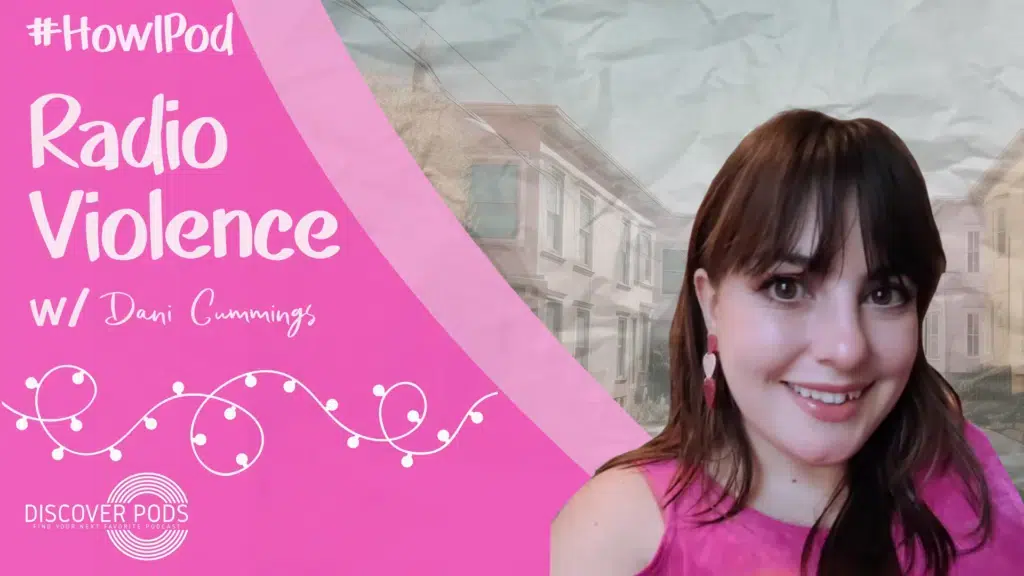
Dani Cummings proved it with Radio Violence, a six-part audio drama mystery she created for $200 total.
Not $200 per episode.
$200 for the entire production setup.
I recently had the pleasure to speak to Dani about her podcast, and specifically, how she goes about creating a fantastic product on a shoe string budget.
I was inspired by how accessible Dani made the process seem. If you’re thinking about starting your podcast in 2026, you should. Don’t wait.
Listen to Radio Violence, get inspired, and get started.
The 2026 Reality: Independent Podcasts Are Back
Do you want a kick ass podcast producer? Of course. It will make your work better.
A sounding board always does.
But do you need a kick ass podcast producer?
To get started?
In that case, no. Your bedroom pod matters just as much as any six-figure production with a celebrity host.
The 2024 plateau showed us what happens when corporations treat podcasts like another content farm to exploit.
They burn through cash, cancel shows mid-season, and leave creators holding the bag.
Independent podcasters kept creating.
They built audiences one listener at a time.
They didn’t wait for permission or funding.
They just started. And that’s the real meaning of life, right?
A philosophy professor defined the meaning as the subjective enjoyment of objectively worthwhile projects.
That’s the definition of Dani’s work.
That’s the BYOFL philosophy Ian MacKaye built with Fugazi in the ’80s and ’90s.
Book your own shows.
Sleep on floors.
Build from the ground up.
No gatekeepers.
No corporate overlords.
Just you, your work, and the people who care about it.
Meet Dani: Arts Minister Turned Audio Drama Creator
Dani Cummings is an arts minister who helps creatives find meaning beyond download numbers and social media metrics.
She’s also a first-time podcaster who decided to create an audio drama about fandom, obsession, and the dangerous spaces where they intersect.
Radio Violence is a six-part fictional mystery about 12-year-old superfan Lexi Bird.
When world-famous pop star Aster vanishes before a big concert, Lexi is convinced she left clues hidden in her work.
Easter eggs in songs.
Symbols in videos.
Secret patterns only true fans catch.
Lexi’s family wants her safe.
Aster’s team wants her quiet.
But Lexi follows the tracks because if she doesn’t, no one will.
It’s a story where fandom becomes a matter of fatality.
Each episode blends immersive audio drama with original songs containing clues.
The deeper Lexi goes, the closer she gets to a truth that could silence her forever.
Think easter eggs of Showgirls meets Stars Hollow in the South.
Conspiracies wrapped in glitter.
Girldads and girlgeniuses navigating a mystery where the clues are in the songs and the puzzle is yours to solve.
Tell me that’s not an intoxicating premise. You can’t, can you?
Dani came from theater, where she learned that story matters more than production value.
Where live performance teaches you to work with what you have.
Where the audience cares about connection, not polish.
She brought that mindset to podcasting and created something that sounds professional without the professional price tag.
The $200 Setup That Actually Works
Here’s what Dani bought:
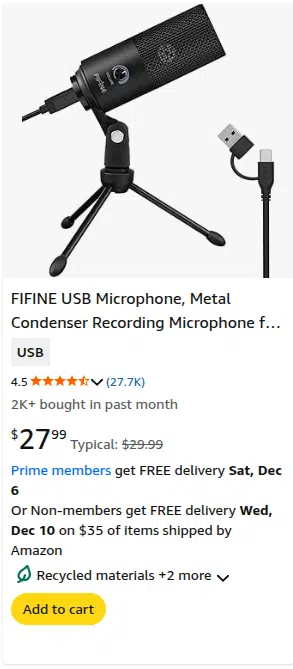
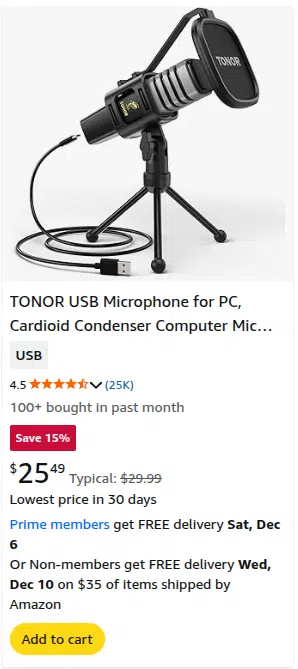
Shure Centraverse Omnidirectional Microphone
Not the fancy Shure SM7B every YouTuber tells you to buy.
An omnidirectional mic that captures multiple voices in one room.
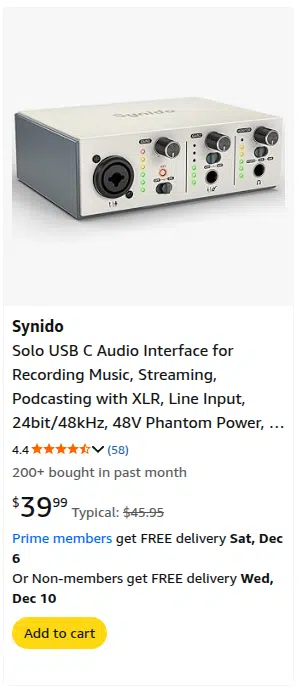
Behringer UMC22 Audio Interface
Basic, reliable, gets the job done. (Reminds me of our band’s demo set up in college).
Audacity (or Ardour)
Free audio editing software.
No subscriptions.
No cloud storage fees.
Just download it and start editing.

Creative Solutions
Basswood block for mic positioning.
Mousepad for dampening vibrations.
NYC basement space with dead acoustics (free access through a friend).
Total cost: $200.
The secret isn’t the gear.
It’s the approach.
“I’m relentlessly practical. I don’t have a lot of money to throw at this, so I have to be creative about how I solve problems.”
Dani Cummings
Dani records her cast live, all together in one room.
Four-hour recording sessions with multiple actors performing simultaneously.
This is how theater works.
It’s also how Nirvana recorded Bleach for $606.17 in 1989.
You don’t need expensive isolation booths and separate recording sessions.
You need people who care about the story and a space where you can capture it.
The Scale of What $200 Can Build
Radio Violence features a full ensemble cast:
Amy Pan, Jonathan Wong Frye, Kelsey Waltermire, Matthew Liu, Lauren Bobrow, Natalie Kane, Victoria Chasi, Jonathan Beebe, Elaine Baez, Laura Zarama, and Shannon McDavid.
Plus the Cummings family, Olivia Ho, Nick Mak, Officer Angel Vega, Melissa Ding, the Schaubert family, and Dianna Manastalas.
“I recorded everyone live in the same room because that’s how theater works. You get the energy, the timing, the natural flow between actors. You can’t fake that in post-production.”
Dani Cummings
That’s over 20 voices in a fully indie production.
Written and produced entirely by Dani Cummings.
No production company.
No corporate backing.
Just a $200 setup and a vision.
If you think you need a studio to create something with this scope, you’re wrong.
You need a plan and the willingness to execute it.
Accessible Podcasting Means Making It for Real People
Dani didn’t make Radio Violence for “theater people.”
She made it for average listeners who want a good story.
That means:
Tight, forward-moving episodes
No 20-minute exposition dumps.
No self-indulgent tangents.
“I’m not making this for theater people. I’m making it for average listeners who want a good story.”
Dani Cummings
Get in, tell the story, get out.
Story over technical perfection.
A great story with decent audio beats perfect audio with a boring story every time.
Pre-production sound effects
Dani prepared 160+ sound effects before recording started. That’s proper DIY foley.
This is the kind of relentless practicality that makes independent projects work.
Full script before recording
No improvising and hoping it works in post.
Write it, rehearse it, record it.
The Ataris didn’t wing their tours.
They planned every show, every route, every backup plan, and every drop of gas.
DIY doesn’t mean unprepared.
It means doing the work yourself instead of paying someone else to do it.
Finding Meaning Beyond the Metrics
Here’s where Dani’s role as an arts minister becomes critical.
She helps creatives dispel what she calls “the myth of the breakthrough.”
The idea that one viral episode or one big feature will change everything.
It won’t.
“The myth of the breakthrough is so damaging. People think one viral moment will change everything, but that’s not how sustainable creative work happens.”
Dani Cummings
Success in independent podcasting looks like consistency, not virality.
It looks like creating because the work matters to you, not because you’re chasing download numbers.
Radio Violence is a passion project.
Dani isn’t trying to monetize it or turn it into a business.
She’s creating because the story deserves to exist.
That’s the mindset that builds empires later.
Fugazi never sold out.
They kept ticket prices low, refused corporate sponsorships, and built a legacy that outlasted every band that took the money.
Start with the passion project.
Build the empire later.
Or don’t build an empire at all.
Just create work that matters to you.
Marketing Radio Violence on Zero Budget
Dani studied how Taylor Swift uses puzzles and easter eggs in her marketing.
Not the music.
The marketing strategy.
Hidden messages.
Coded clues.
Fans hunting for meaning in every detail.
That’s guerrilla marketing any independent creator can replicate.
Here’s what Dani did:
QR code business cards hidden in used bookstores
Round vinyl-looking cards tucked into relevant books across Manhattan.
Physical artifacts that feel like easter eggs.
Readers discover them organically while browsing.
Instagram “hintstagram”
Coded messages and clues about the show at @radioviolencepodcast.
Building mystery before launch.
Fans piece together the puzzle in real time.
AI-generated EP of “Aster music”
Transparent about using AI.
Created a soundtrack for the fictional pop star in the show.
The songs contain clues that tie into the mystery.
Launch party strategy
Bringing people together in person.
Building community before the first episode drops.
Zero budget.
Maximum creativity.
That’s accessible podcasting.
Who This Approach Is For
Radio Violence isn’t a blueprint for everyone.
But it’s proof that you can start with almost nothing.
This approach works if you:
Have a story you need to tell
Not a story you think will get downloads.
A story that won’t leave you alone until you create it.
Care more about the work than the metrics
Downloads are nice.
Creating something meaningful is better.
Are willing to be relentlessly practical
DIY doesn’t mean sloppy.
It means figuring out creative solutions to budget constraints.
Want to start now instead of waiting for perfect conditions
Perfect conditions don’t exist.
Dani started with $200 and a basement.
What’s your excuse?
FAQ: Accessible Podcasting Questions
Can I really start a podcast for under $200?
Yes.
Dani did it with Radio Violence.
You can too.
Buy a decent USB mic, download Audacity, and start recording.
You don’t need a studio.
Do I need expensive equipment to sound professional?
No.
You need to understand basic audio principles and edit carefully.
A $200 setup with good technique beats a $2,000 setup with bad technique every time.
How do I record multiple people without a studio?
Find a quiet space with dead acoustics.
Use an omnidirectional mic.
Record everyone together.
Theater has been doing this for centuries.
Dani recorded over 20 cast members this way.
What if I don’t have a big audience?
Start anyway.
Nirvana’s first show had 15 people.
Fugazi built their audience one show at a time.
Your first episode will have a small audience.
Your hundredth episode will have a bigger one.
But only if you start.
How do I market a podcast with no budget?
Get creative.
Dani hid QR code cards in Manhattan bookstores.
She built mystery on Instagram with coded messages.
She created original music for her fictional pop star.
Guerrilla marketing works when you understand your audience and give them something to discover.
Just Start
Dani Cummings spent $200 and created Radio Violence.
She didn’t wait for funding.
She didn’t wait for the perfect equipment.
She didn’t wait for permission.
She just started.
That’s accessible podcasting in 2026.
That’s the BYOFL ethos applied to audio storytelling.
That’s what independent creators do when they stop making excuses and start creating.
Listen to Radio Violence at pod.link/radioviolence.
Follow the hintstagram at @radioviolencepodcast.
Support the show on Venmo @radioviolencepodcast if you enjoy it.
Then stop reading articles about podcasting and start recording your own show.
The independent podcast resurgence is happening right now.
You can either watch it happen or be part of it.
Your move.