- Artificial Intelligence
- Creator Mental Health
- Featured Posts
- Guides
- Podcast Marketing and Monetization
- Podcast Research
- Podcast Thoughts
Know Your Podcast Listener Profile: A 2025 Growth Strategy

Last updated on August 15th, 2025
The writing’s been on the wall a while. But now, there’s no denying it.
The podcast landscape in 2025 is brutal.
You’ve noticed it, right?
Gone are the days when you could launch a show, submit it to directories, and watch the listeners roll in.
The algorithms have turned against us. All of us. Creators and consumers alike.
The directories are saturated.
Listeners have more options than ever, but in the walled off pay gardens, they’d never know it.
Indie creators and the podcast listener both have to do more work to connect.
I know what you’re thinking: “Great, now I need to do MORE work to grow my podcast?”

Yes. Yes, you do.
But here’s the good news. It’s not about working harder, it’s about working smarter.
Enter the 80/20 principle. We’ve talked about the Pareto Principle before.
You know it. 80% of your results come from 20% of your efforts.
Now, this assumes you’re tracking your effort. We’re going to get to that later.
In 2025, that 20% is all about knowing exactly who your listeners are.
Not vague demographics.
Not broad assumptions.
But detailed, specific listener profiles that guide everything from your content to your marketing.
Every content creator across the internet should be doing this, and podcast creators are no exception.
The days of casting a wide net are over.
The future belongs to precision targeting and community building.
In this guide, I’ll walk you through exactly how to identify your ideal listeners, where to find them, and how to create content that turns them into loyal fans.
No fluff.
No BS.
Just workable strategies that make today’s shifting landscape a little easier to navigate.
Ready to stop shouting into the void and start growing a podcast that matters?
Then read on.
Why Random Strategies No Longer Work
The “spray and pray” approach to podcast growth is dead.
Seriously, stop wasting your time.
In 2023, there were over 5 million podcasts with more than 70 million episodes [Podcast Industry Statistics, 2023].
That number has only grown in 2025.
Your show is competing with literally millions of others for attention.
And the algorithms that once helped listeners discover new content? They’ve changed.
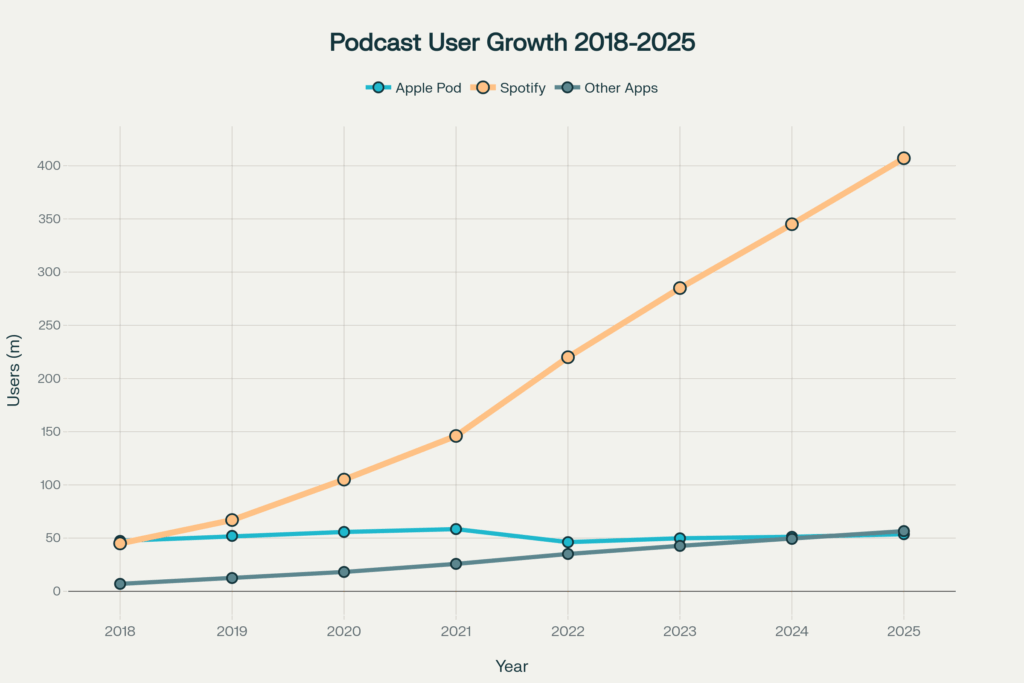
Apple, Spotify, and YouTube now prioritize engagement metrics over subscriber counts. New shows are getting crushed by the algorithm.
It makes sense. How much money is a brand new show making the platform? It’s a gamble.
It’s the same reason we are subjected to so many reboots, or franchise sequels, and spin offs until the audience is so absolutely burned out on the IP they have to move on to the most recent success.
This means a podcast with 100 super-engaged listeners often outperforms one with 1,000 passive subscribers.
I’ve seen shows with 500 dedicated fans generate more revenue than shows with 10,000 casual listeners.
Advertising based on downloads isn’t the only way to monetize your podcast.
The math is simple but brutal.
Engagement is the new currency. Attention = value. Or so the conventional 2025 wisdom goes.
Look at what happened to blogs and YouTube channels over the past decade.
First came the gold rush.
Then the algorithm changes.
Then the desperate pivot to engagement.
Podcasting is following the exact same pattern, just a few years behind.
The data backs this up. So does the subjective experience.
According to research on listener behavior, podcast audiences who feel personally connected to hosts are 7x more likely to support financially and 4x more likely to recommend to friends [Developing a Detailed Listener Persona for Your Podcast].
This isn’t just theory.
Take the case of “The Daily Dad” podcast.
Okay, Ryan Holiday is enormous now. But he did it the right way. More importantly, he seemed very well put together and authentic along the way.
Ryan focused exclusively on fathers concerned about raising good children. And doing so in a dumpster fire world where we have measles again.
Narrowing their focus was clutch. Instead of trying to appeal to all parents, they built a community of 50,000 highly engaged listeners who purchase merchandise, and evangelize the show.
Niche down until it doesn’t make sense anymore.
Compare that to general parenting podcasts with 3x the audience but 1/5 the engagement.
The shift from quantity metrics to quality interactions isn’t optional anymore.
It’s survival.
Social platforms have already made this transition.
Instagram engagement rates plummeted from 4.7% to 1.9% for accounts trying to reach “everyone” [Social Media Engagement Statistics, 2024].
Meanwhile, niche creators maintaining focused audience relationships saw rates hold steady at 4.5%.
The lesson is clear.
When you try to speak to everyone, you end up speaking to no one.
Your podcast growth strategy needs to evolve from “How do I get more listeners?” to “How do I find the RIGHT listeners?”
This isn’t just about being trendy.
It’s about the fundamental economics of content creation in 2025.
The platforms reward specificity.
The algorithms reward engagement.
And listeners reward authenticity.
Random growth strategies are expensive, exhausting, and increasingly ineffective.
It’s time for a more targeted approach.
The Listener Profile Revolution
A listener profile is simply a detailed description of your ideal podcast fan.
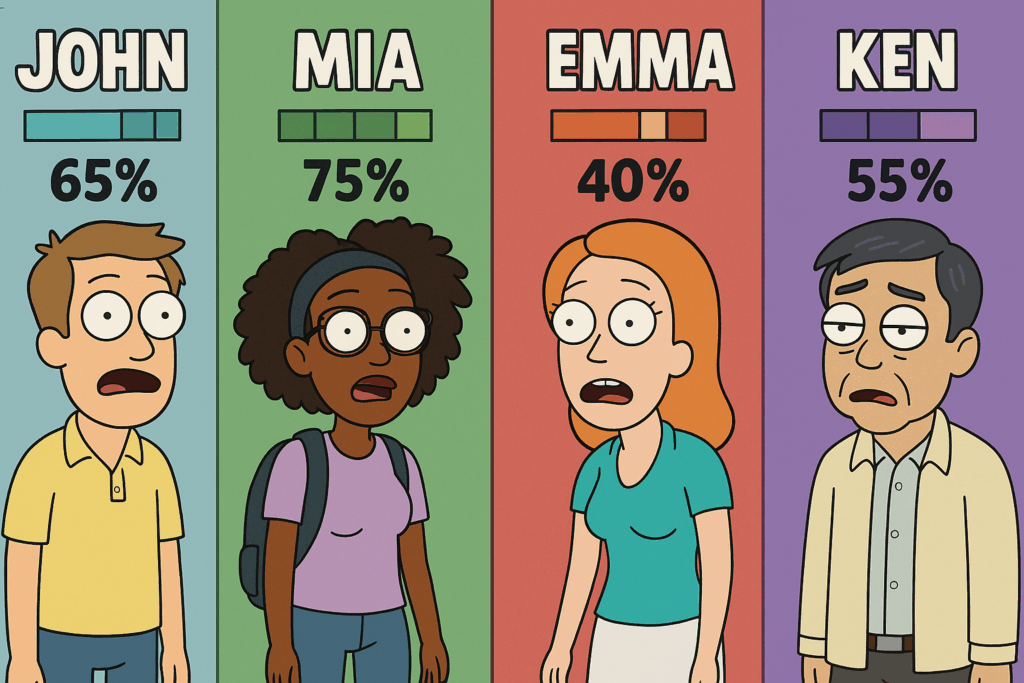
Think of it like a character sketch for the person you’re creating content for.
It’s not just age and location – it’s their problems, desires, habits, and quirks.
Why does this matter? Because it makes EVERY decision easier:
- Content creation becomes faster when you know exactly who you’re talking to
- Marketing becomes cheaper when you target the right people
- Growth becomes sustainable when you attract listeners who stick around
The difference between demographic data (age, location, income) and psychographic insights (values, problems, desires) is massive.
Demographics tell you where your listeners are.
Psychographics tell you how to connect with them.
Look at “My First Million” podcast. They don’t target “entrepreneurs” (too broad).
They target “entrepreneurial-minded people who are obsessed with business opportunities and hate conventional career advice.”
That specificity guides everything from their episode topics to their ad partners.
The result? A devoted community that feels like the hosts are speaking directly to them.
When you know exactly who you’re talking to, you stop wasting time on:
- Topics your audience doesn’t care about
- Platforms where your listeners don’t hang out
- Marketing messages that don’t resonate
A clear listener profile isn’t limiting – it’s liberating.
It’s the difference between shouting into a crowded room and having a conversation with a friend.
Practical Methods for Creating Your Listener Profile
Let’s get practical. Here’s how to build your listener profile without spending weeks on research:
1. Survey Your Existing Listeners
- Keep it short – 5 questions max
- Ask about problems, not demographics (“What’s your biggest challenge with…?”)
- Offer an incentive for completion (exclusive episode, shoutout, etc.)
- Use Google Forms or Typeform – both have free options
2. Social Media Detective Work
- Find 3-5 podcasts similar to yours
- Study their most engaged followers (not just any followers)
- Look for patterns in bios, posts, and interactions
- Note the language they use to describe their interests and problems
This isn’t creepy – it’s research. You’re looking for patterns, not stalking individuals.
3. Analytics Deep Dive
- Episode popularity – What topics resonate most?
- Drop-off points – Where do listeners lose interest?
- Traffic sources – How are people finding you?
- Device usage – Mobile vs. desktop can reveal listening habits
Most hosting platforms provide these insights for free. Use them!
4. The Listener Interview
Pick 3-5 engaged listeners and ask them:
- “What made you press play on your first episode?”
- “What problem were you hoping to solve?”
- “What other podcasts/content do you consume?”
- “What’s one thing you wish I would cover more?”
One 20-minute conversation can reveal more than hours of data analysis.
5. The Competitor Content Audit
- Review the top 10 episodes of your 3 biggest competitors
- Identify common themes and topics
- Note the language used in titles and descriptions
- Read the comments/reviews for listener reactions
This shows you what’s already working in your niche.
6. Create Your Listener Avatar
Combine all this research into a single profile that includes:
- Core problems they’re trying to solve
- Key motivations for listening to podcasts
- Content consumption habits (when, where, how they listen)
- Language and terminology they use
- Other interests and communities they belong to
Give this person a name. Seriously.
When you’re creating content, imagine talking directly to “Marketing Mike” or “Podcast Paula.”
This simple trick makes your content instantly more conversational and focused.
The goal isn’t a perfect profile. Nobody’s perfect.
It’s a useful tool that makes content creation decisions faster and more effective.
Start with what you know, and refine as you learn more about your actual audience.
Turning Listener Profiles into Growth Actions
Now that you know who your listener is, let’s put that knowledge to work.
Here’s how to turn your listener profile into actual growth:
Content That Connects
- Topic selection – Choose topics that solve your listener’s specific problems
- Episode structure – Format your show based on how your listener consumes content
- Language choice – Use the words and phrases your listeners actually use
- Episode length – Match your content length to your listener’s available time
For instance, If your listener profile is “busy parents who commute,” don’t create 90 minute shows. Create 20-minute episodes that solve specific parenting challenges.
You can create both time formats, or a series of them. Just be consistent when you’re publishing. So people know that the short episodes come out every Tuesday, and the long weekend listens come out Fridays.
Platform Selection That Makes Sense
Don’t waste time on platforms your listeners don’t use:
- Instagram works for visually-oriented, younger audiences
- LinkedIn connects with professional, industry-focused listeners
- Twitter/X reaches news junkies and topic enthusiasts
- TikTok works for younger, entertainment-focused audiences
Communities already exist, you just need to be where your people are at.
Pick the ONE platform where your listeners actually hang out and master it before adding others.
Messaging That Resonates
Your episode titles, descriptions, and promotional copy should speak directly to your listener’s needs:
- Before: “Episode 45: Interview with Marketing Expert Jane Smith”
- After: “How to Double Your Email Open Rates Without Writing Better Subject Lines”
See the difference? The second speaks directly to a specific problem your listener has.
Community Building That Works
- Create spaces where your listeners can connect with each other
- Ask questions that encourage meaningful discussion
- Highlight listener wins and stories in your episodes
- Develop inside jokes and references that create belonging
Remember: Communities form around shared problems and goals, not just shared interests.
Test Ideas With Your Listener Avatar
Create a custom ChatGPT bot that personifies your listener to test ideas quickly:
- Upload your listener profile to a custom GPT
- Add examples of how your listener talks and thinks
- Test episode ideas, titles, and topics before production
This keeps momentum going when real listeners aren’t available for feedback.

The 80/20 Principle in Action
Not all listener interactions are created equal.
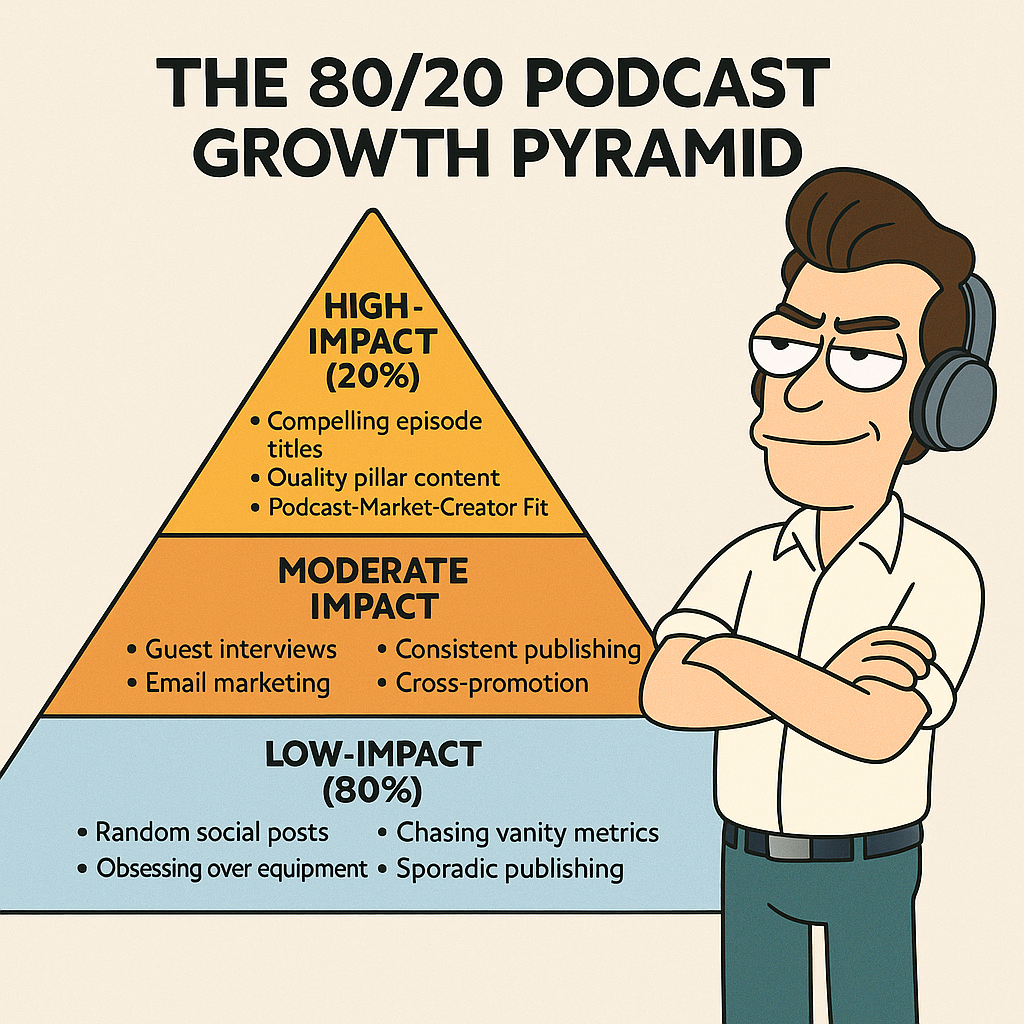
Here’s how to focus on the 20% of work that drives 80% of your growth:
High-Impact Activities Worth Your Time
- Responding to thoughtful comments and messages
- Creating content that addresses specific listener questions
- Collaborating with creators who share your audience
- Participating in communities where your listeners gather
Low-Impact Activities to Minimize
- Chasing vanity metrics (downloads without engagement)
- Posting on platforms where your listeners aren’t active
- Creating generic content that doesn’t solve specific problems
- Networking with creators outside your niche
Automation That Doesn’t Feel Robotic
- Schedule social posts promoting episodes in advance (I like using followr.
- Create email templates for common listener interactions
- Use transcription services to repurpose audio content
- Set up listener onboarding sequences for new subscribers
Tools like Make, Descript, and SendFox make this easy even for beginners. Followr is fantastic for cheap social media management. Especially if you’re using Twitter (I’m not calling it a single letter).
Real-World Example: The Minimalists Podcast
Joshua Fields Millburn and Ryan Nicodemus built a podcast with millions of downloads by:
- Creating a clear listener profile: “People overwhelmed by consumerism seeking meaningful simplicity”
- Focusing on their listeners’ specific challenges
- Building a community around shared values
- Ignoring platforms and topics that didn’t serve their core audience
They don’t try to appeal to everyone. They speak directly to their people.
And their people listen.
The 20-Minute Daily Growth Routine
- 5 minutes: Respond to the most thoughtful listener comment
- 5 minutes: Share one piece of content where your listeners hang out
- 5 minutes: Connect with one creator who shares your audience
- 5 minutes: Note one listener question/problem for future content
This simple routine, done consistently, will outperform hours of random marketing efforts.
Remember: In 2025, podcast growth isn’t about reaching more people.
It’s about reaching the right people more effectively. That’s what your refined podcast listener profile is built to do.
Conclusion
Building a detailed listener profile isn’t just another marketing task.
It’s your sustainable growth foundation in 2025.
The search engines are out to get theirs. They don’t care about you. They have shareholders and that’s a simple reality.
The podcasters who thrive this year won’t be the ones with the biggest budgets or the fanciest equipment.
They’ll be the ones who truly understand who they’re talking to.
Start small.
Create a basic listener profile today.
Refine it as you learn more.
And watch how it transforms your content creation process.
Every minute you spend understanding your listeners saves you hours of wasted effort later.
In a world of infinite content and limited attention, specificity wins.
Know your listener.
Speak directly to them.
Build something that matters.
The algorithms will change.
The platforms will come and go.
But the connection between a podcaster and their ideal listener?
That’s timeless.
FAQ
“I don’t have time for all this extra work. Is there a shortcut?”
Start with just one method – listener interviews are the highest ROI activity.
Even one conversation with an engaged listener will give you more insight than hours of guesswork.
The time you invest upfront saves countless hours of creating content that doesn’t resonate. [Research shows creators who develop listener personas spend 60% less time on content planning and experience 45% higher engagement rates. (Methods for Creating Customer, Client, and Listener Profiles)]
“What if I want to appeal to everyone?”
You don’t.
Even the biggest podcasts in the world started with a specific audience.
Joe Rogan didn’t try to appeal to everyone – he created content for curious, open-minded people interested in long-form conversations.
The more specific your target, the easier it is to hit.
“How often should I update my listener profiles?”
Review your listener profile quarterly.
Update it significantly once a year.
Your audience will evolve as your content does. Stay connected through regular surveys and conversations to catch these shifts.
“Can I use AI to help with this process?”
Absolutely.
AI tools can help analyze listener comments, transcribe interviews, and identify patterns in your data.
But the human touch matters – AI can process what your listeners say, but you need to understand why they say it.
“What’s the minimum viable listener profile?”
At minimum, know these five things about your listener:
- Their biggest problem related to your podcast topic
- Why they care about solving this problem
- What solutions they’ve already tried
- Where they currently get information
- What success looks like for them
This basic framework will guide 90% of your content decisions.
“I have multiple types of listeners. Should I create multiple profiles?”
Start with your primary listener – the one who would miss your podcast most if it disappeared tomorrow.
Once you’ve mastered creating content for them, you can develop secondary profiles.
Most successful podcasts have 2-3 listener profiles, with one clear primary target.

Previous Story
Navigating Toxic Manosphere Podcasts in 2025
Next Story
25 Good Art Podcasts in an AI World