


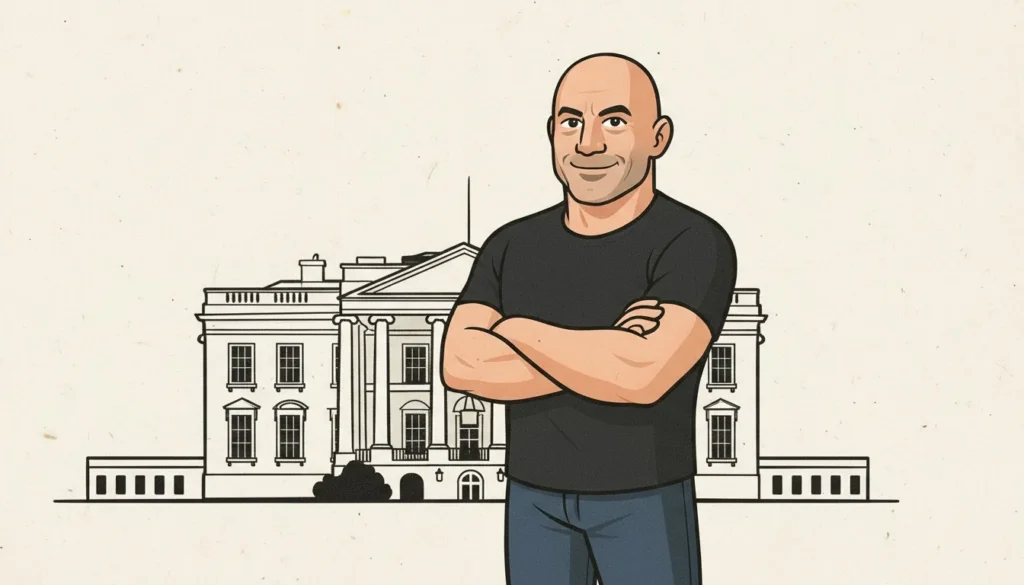
The 2024 election wasn’t decided by TV ads or campaign rallies.
Nope. Podcast studios won the election. Or lost it. Depending on your persuasion.
Podcasts are redefining media trust in our national (and global) landscape.
By Election Day, Donald Trump’s three-hour conversation with Joe Rogan had racked up over 40 million views¹. That’s insane.
Kamala Harris? She declined the invitation². That decision might have cost her the presidency.
Welcome to the Podcast Election!
Where authenticity beats advertising, and intimate conversations “trump” campaign speeches.
We’re living through the most significant shift in media consumption since video killed the radio star.
Podcasts aren’t mere entertainment anymore. They’re the new kingmakers of American democracy.
The Great Redefining Media Trust Migration
Here’s the uncomfortable truth. Traditional media doesn’t want to admit that people trust podcast hosts more than trained journalists. Media doesn’t want any part of that.
You know who does? The Pentagon.
They announced as much the morning I sat down to write this. What timing.
Today, the Department of War is announcing the next generation of the Pentagon press corps.
— Sean Parnell (@SeanParnellASW) October 22, 2025
We are excited to announce over 60 journalists, representing a broad spectrum of new media outlets and independent journalists, have signed the Pentagon’s media access policy and will be…
Sixty-five percent of podcast listeners trust their favorite hosts more than any other media personality³. That goes for audio and video podcasts. That distinction isn’t quite as important as it usually is.
That’s not a bug—it’s a feature.
While CNN and Fox News scream at each other, podcast hosts are having real conversations.
Remember when Jon Stewart crushed CNN’s Crossfire in a single appearance? It didn’t stick. They’re doing some version of that with shows like The Five and CNN’s round table discussions.
Both sides represented in a few seconds of gotcha. Ugh. It’s the format.
Podcasts on the other hand…
No teleprompters. No corporate overlords. Just two people talking for three hours.
Joe Rogan is the perfect example. Fourteen and a half million Spotify followers⁴. Eighteen million YouTube subscribers⁵. His audience spans political parties, age groups, and income levels.
When Rogan talks, America listens. Feel about that how you wish, I certainly do, but it’s the reality we’re living in. Podcasts and podcast hosts have real power. Cache.
They are grabbing attention in a way that AM radio wishes it could.
Harris’s team understood this power. It’s why they spent weeks negotiating a potential appearance. But they wanted editorial control, a shorter format, and Rogan to come to them.
Rogan said no.
Harris walked away.
Trump showed up.
That single decision crystallized everything wrong with traditional political strategy in 2024. Harris’s team was still playing by old rules while Trump was writing new ones.
Podcasts: The New Town Square
One-third of Americans now get their news from podcasts⁶. That’s up 45% from 2020⁷.
We’re not just talking about political junkies downloading “Pod Save America.”

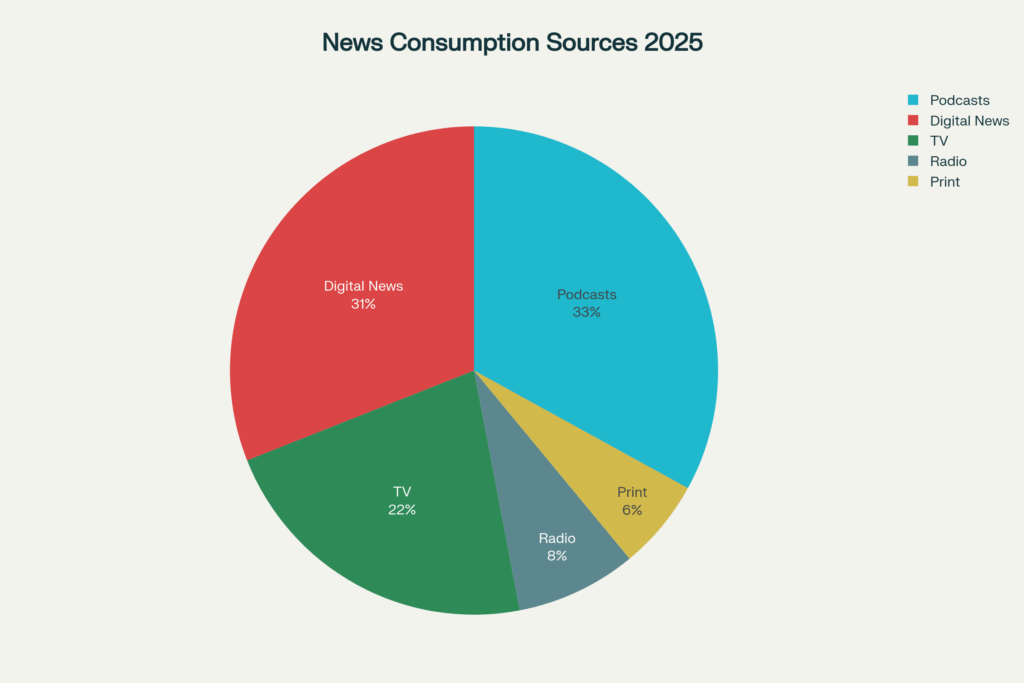
Regular people are choosing podcast conversations over cable news shouting matches.
The numbers tell the story:
- 584 million people worldwide consume podcasts monthly⁸
- 55% of Americans listen regularly⁹
- Average consumption: 9 hours per week¹⁰
That’s more time than most people spend watching Netflix.
Rogan’s political influence extends far beyond his massive audience.
Fifty-one percent of his listeners are aged 18-34¹¹—exactly the demographic that decides elections. You know, if they get energized and show up.
These aren’t your grandfather’s news consumers.
They don’t trust institutions. They trust individuals.
When Trump sat down with Rogan for three hours, he wasn’t just reaching 40 million viewers. He was accessing the most influential media ecosystem in America.
Clips from that conversation exploded across TikTok, Instagram, and X. The multiplier effect was massive. Network effect is real.
The Economics of Influence
Podcast advertising will hit $2.6 billion by 2026¹². But here’s what makes podcast ads different: they work.
Host-read advertisements produce 50-60% higher purchase intent than traditional digital ads¹³.
Why?
Because listeners trust the messenger. When your favorite podcast host recommends a product, it feels like advice from a friend. Parasocial relationships are real.
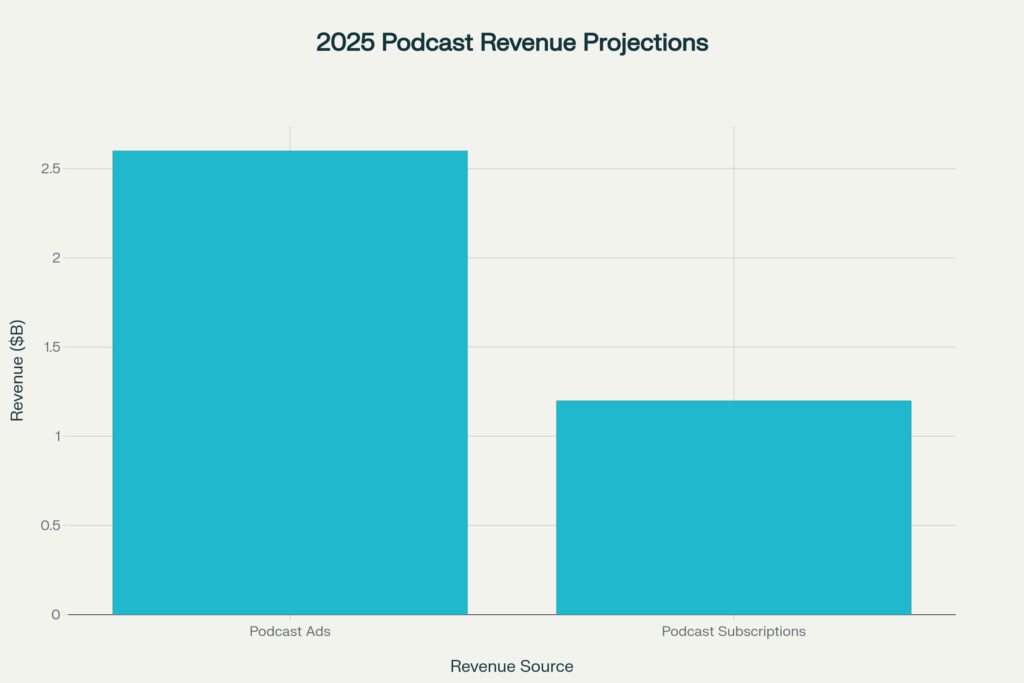
The subscription economy is exploding too.
Apple Podcasts hosts over 500,000 paid shows, generating $1.2 billion in subscription revenue for 2025¹⁴.
Audiences are literally paying to hear specific voices.
That’s unprecedented in media history.
Research from Voxtopica and Signal Hill Insights reveals something fascinating about political podcast advertising¹⁵.
Listeners report higher trust and connection with candidates who appear on their favorite shows.
They remember political messages from podcasts better than traditional digital advertising. The intimate nature of the medium creates deeper engagement.
This isn’t only about reach—it’s about resonance.
The 2024 Podcast Election
Political analysts are calling 2024 “The Podcast Election” for good reason¹⁶.
Trump appeared on 14 different podcasts during his campaign¹⁷.
Harris managed just 6¹⁸.
Her appearance on Call Her Daddy was large, but nowhere near as large as Rogan.
Trump’s podcast strategy was brilliant in its simplicity.
He went everywhere: Rogan, Logan Paul’s “Impaulsive,” Theo Von’s “This Past Weekend,” Andrew Schulz’s “Flagrant.” Attacked with the energy of a retired approachable grandpa. With a pitch.
Each appearance reached different demographics with the same “authentic” Trump persona.
The Rogan episode alone generated more views than most Super Bowl commercials.
But Trump didn’t stop there. He hit the Nelk Boys’ “Full Send” podcast, reaching college-aged men.
He appeared on “Bussin’ With The Boys,” connecting with sports fans. Each show amplified his message across different communities.
Trump was all over the man-o-sphere.
Harris’s team, meanwhile, was still buying traditional TV ads. They were fighting the last war while Trump’s team was winning the current one.
That 45% jump in where people get their news is hard to put in perspective.
The global implications are staggering.
Indian Prime Minister Narendra Modi appeared on Lex Fridman’s podcast, reaching international audiences¹⁹.
World leaders are recognizing what American politicians learned in 2024… podcasts are the new diplomatic channel.
One without gatekeepers keeping track of little things like truth or accuracy.
Eating Everyone’s Lunch
Podcasts aren’t just growing, no, they’re cannibalizing other media.
Edison Research shows listeners are shifting time away from streaming TV, social media, and traditional radio²⁰.
The average American now spends more time listening to podcasts than watching cable news.
YouTube’s emergence as a podcast platform accelerated this trend. Forty percent of U.S. podcast listeners now watch video podcasts²¹.
The line between audio and video content is disappearing. We’re not huge fans, but that’s the way it is. If you’re podcasting and ignoring video entirely, you’re creating your own roadblocks.
Here’s the kicker: podcast content performs better on social media algorithms than native social content.
Clips from Trump’s Rogan appearance rotated on TikTok and Instagram for weeks.
The algorithm rewarded authentic, long-form conversation over produced campaign content. Traditional media companies are scrambling to adapt.
CNN and MSNBC launched multiple podcasts. The New York Times bought Serial Productions. Even Netflix is investing in podcast content.
They see the writing on the wall.
The Multiplier Effect in Action
By the Numbers:
- 584M global podcast listeners
- 55% of Americans listen monthly
- 9 hours per week average consumption
- 40M+ views on single Trump-Rogan episode
- 14 vs 6 podcast appearances (Trump vs Harris)
The Cascade Effect: Single podcast appearances now create content cascades across platforms. A three-hour Rogan conversation becomes hundreds of TikTok clips. Each clip reaches different audiences, amplifying the original message exponentially.
This multiplier effect gives podcasts unprecedented influence in shaping public opinion.
What Comes Next
Podcasts have evolved. The pandemic brought podcasting to the mainstream. With the mainstream came real money.
From a niche storytelling format into the connective tissue of modern public discourse.
They’ve become the primary way Americans discover new ideas, evaluate political candidates, and make purchasing decisions.
That may be well and good. Time will tell. The medium is still nascent enough that norms and hierarchies aren’t completely solidified.
We’ve seen an interest in independent creators tick up after a large post COVID drop off. That’s been heartening to see.
The 2024 election proved that authenticity beats advertising.
Long-form conversation hits better than scripted sound bites.
Trust matters more than reach.
Traditional media spent decades building walls between audiences and personalities. Podcasts tore those walls down. The result is a more intimate, more influential, and more democratic media landscape.
The sound of influence isn’t the roar of a crowd or the buzz of breaking news. It’s two people having a real conversation.
And in 2024, that conversation changed everything.
Was it a fluke? Will these trends continue?
I’m biased. I know. That said…
I can’t wait to find out.
FAQ
Q: Why are podcasts more trusted than traditional media?
A: Podcasts offer unfiltered, long-form conversations without corporate editorial control. Listeners develop personal relationships with hosts over hundreds of hours of content.
Q: How did podcasts influence the 2024 election?
A: Trump’s 14 podcast appearances, especially his 40M-view Rogan episode, reached younger demographics that Harris couldn’t access through traditional media.
Harris did appear on large podcasts as well, but not with the same fervor.
Q: Are podcasts replacing traditional news sources?
A: For many Americans, yes. 33% now get news from podcasts, up 45% from 2020, especially among younger demographics who distrust institutional media.
Q: Why didn’t Harris appear on Joe Rogan?
A: Her team wanted editorial control and a shorter format. When Rogan refused these conditions.
Harris’ team, in the end, declined the invitation.
Q: What makes podcast advertising so effective?
A: Host-read ads feel like personal recommendations from trusted friends. That is producing 50-60% higher purchase intent than traditional digital advertising.