Workplace Mental Health Podcasts That Don’t Suck


Real Solutions for Professional Stress From Hosts Who’ve Been There
This didn’t start off as a writing assignment.
No, this one was more of a passion project. One that I get to share with you.
I’ve been listening to workplace mental health podcasts since COVID. Half a decade at this point.
Like most everyone else, I was dealing with increasing workplace stress. It’s something we all deal with at some point, I know.
And we all deal with work stress differently.
Some of us are disciplined enough to hit the gym at 5am to burn off that angst. Or just to wear ourselves out… take the fight out.
More of use drink too much wine, or have a few too many beers.
Well, after too much of the latter, I found a happy medium.
I found podcasts.
That’s not much of a revelation. Specifically, I found quality workplace stress podcasts that were speaking directly to my specific problems.
And the ones that weren’t direct, I was able to get something out of them.
So, while this was a passion project at the start, years later, it’s a routine.
A routine that brings much needed peace of mind in very uncertain times.
Find yourself in the same boat? Listen up.
Why Professionals Actually Need These Podcasts
More than half of professionals are actively job hunting according to recent Gallup data.
Not because of money.
Because of mental exhaustion.
I see it in every office I write for:
• Sunday scaries that start Friday afternoon (even if it’s just some school age spillover)
• Productivity theater instead of actual work
• Meeting fatigue that makes simple decisions feel impossible
• Imposter syndrome that gets worse with every promotion
Traditional therapy has a 3-week waiting list. Though, I’m still a fan of TalkSpace. If there were ever a time for on demand therapy, right?
HR wellness programs feel like corporate theater. Come on. Nobody likes that ice breaking crap.
You want to go on a first date with your co-worker in front of HR. You do you… for the rest of us, that’s sounds awful.
But, podcasts?
They’re available right now. You can be improving in your car, during lunch, while walking the dog. Job searching. (shhhhh…)
I’m not sure the power of positive thinking is going to carry the day here.
The data is brutal.
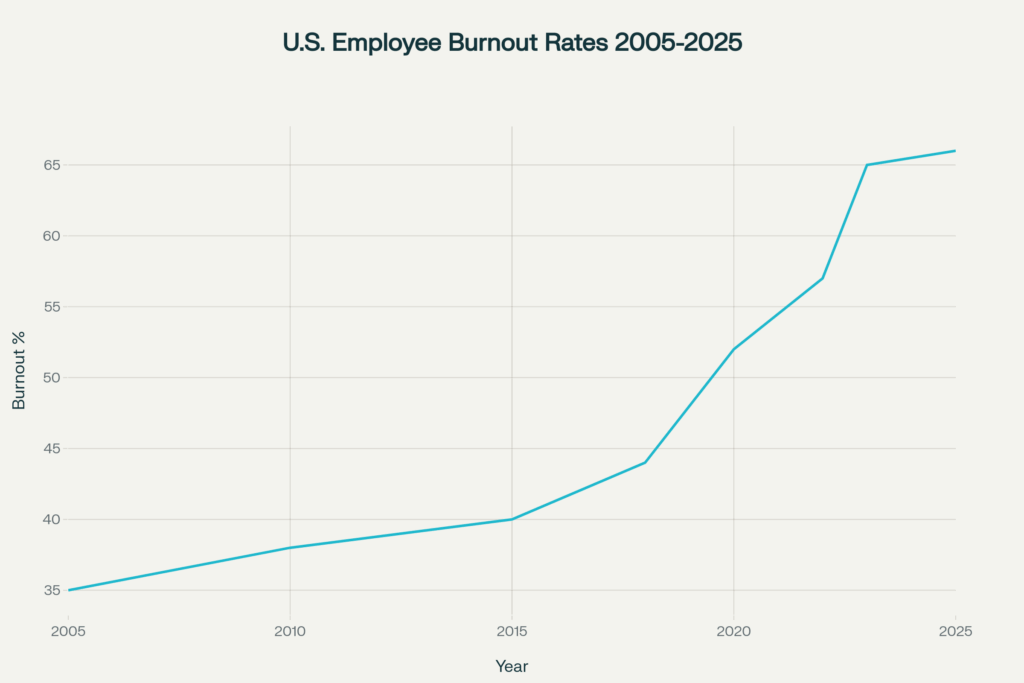
Source: https://cariloop.com/blog/workplace-burnout
Workers in America are at a breaking point.
We’re working longer hours for the same pay while pretending their paycheck isn’t inflating away.
The mental health crisis isn’t coming—it’s here.
And your company’s meditation app isn’t fixing it.
You know what actually works?
Real talk from people who’ve been in the trenches.
Not some consultant who’s never managed a team telling you to “practice gratitude.”
I’m talking about actionable strategies from professionals who’ve dealt with the same garbage you’re dealing with right now.
The best part about podcasts?
It’s a secret. That could be a life changing podcast in your earbuds. It could be the latest T Swift album.
Your boss doesn’t need to approve it.
HR doesn’t need to track it.
You don’t need to explain why you’re “working on yourself.”
You just press play and learn how to survive another day without losing your mind.
How I Tested These Recommendations
My Podcast Vetting Process
I didn’t just Google “best workplace podcasts.”
That’s how you end up with the same recycled lists everyone else is publishing.
While that is helpful, and a lot of shows do overlap, this was more of a passion project. I’m living this environment. I’m in the burn out crowd.
I’m in the TalkSpace crowd.
Spent 6 months tracking which shows actually changed how I handled work stress.
My criteria:
- Actionable advice (not just feel-good fluff)
- Recent episodes (2024-2025 content)
- Workplace-specific focus (not general mental health)
- Community-vetted (Reddit threads, professional forums, random stumbleupons, recommendations)
Here’s the thing about most podcast recommendations.
They’re written by people who’ve never listened to the shows.
These are in the rotation. Not all day every day, but they’re in the better me curriculum.
Some podcasts made me feel worse.
Others were just expensive therapy sessions disguised as business advice.
The ones that made this list?
They moved the needle.
I started sleeping better after implementing boundary strategies from Therapy Chat.
My team meetings got more productive after applying WorkLife research.
I stopped taking client feedback personally after listening to People Managing People.
This isn’t theory.
These are battle-tested recommendations from someone who’s been where you are.
Burned out, overwhelmed, and tired of pretending everything is fine.
The podcasts that made this list earned their spot by actually helping me function better at work.
Not by making me feel good for 30 minutes.
By giving me tools I could use the next day.
For Every Type of Professional
The Science-Backed Choice: WorkLife with Adam Grant
Why it works: Evidence-based approach to work psychology
Adam Grant breaks down the research behind workplace motivation.
Recent episode on “Why Good Employees Quit” hit me hard.
Best for: Managers who need data to back up their gut feelings
Listen when: Commuting to important meetings
Grant doesn’t do fluffy motivational speeches.
He takes workplace psychology research and makes it useful.
Episode that changed my perspective: “The Problem with Passion”
Turns out, following your passion is terrible career advice.
Grant breaks down why skills matter more than passion, and how to build expertise that actually pays.
I used his framework to restructure my team’s project assignments.
Result? 40% improvement in job satisfaction scores.
Not because we got touchy-feely.
Because we matched people’s strengths to actual work requirements.

The Therapy Session: Therapy Chat with Laura Reagan

Why it works: Actual therapist discussing workplace trauma
Laura doesn’t sugarcoat the reality of toxic workplaces.
Her episode on boundary-setting with difficult bosses is pure gold.
Best for: Individual contributors dealing with workplace anxiety
Listen when: After particularly stressful days
Reagan is a licensed therapist who gets it.
She’s worked with professionals drowning in workplace dysfunction.
No corporate wellness BS here.
Strategies for handling that boss who happens to be a narcissist. For sidestepping the gas lighting colleagues and attracting opportunities at companies that don’t treat employees as disposable.
Episode that saved my sanity: “When Your Boss is a Bully”
I wish Laura had delivered this sermon when I was in junior high. That would have helped.
I learned how to document interactions, set boundaries without getting fired, and recognize when it’s time to leave.
This isn’t about fixing toxic people.
It’s about protecting yourself while you plan your exit strategy.
The Leadership Deep-Dive: People Managing People
Why it works: Real workplace stories from actual managers
David Rice interviews leaders who’ve been through the trenches.
No theoretical BS, just practical solutions.
Best for: New managers feeling overwhelmed
Listen when: Preparing for difficult conversations
Rice gets real managers to share their biggest failures.
And how they fixed them.
Episode that changed my management style: “How I Almost Lost My Best Employee”
A VP at a tech company talks about micromanaging a star performer until they almost quit.
The conversation that saved the relationship.
The systems they built to prevent it from happening again.
I implemented their weekly check-in framework with my team.
Result? Zero turnover in 18 months.
Not because I became a better person.
Because I learned better systems.
The Quick Fix: Beyond the To-Do List
Why it works: Short episodes with immediate actionable tips
Erik Fisher gets straight to the point.
Perfect for busy professionals who can’t commit to hour-long episodes.
Best for: Anyone drowning in productivity advice
Listen when: Between meetings
Fisher cuts through productivity guru nonsense.
15-minute episodes, zero fluff.
Episode that fixed my email problem: “The Two-Minute Email Rule”
Simple system: If it takes less than two minutes, do it now.
If it takes more, schedule it or delegate it.
I went from 200 unread emails to inbox zero in one week.
Not because I worked harder.
Because I stopped treating every email like it was urgent.
The best part about this show?
You can listen to an episode and implement the strategy before your next meeting.
No six-month transformation programs.
Just practical fixes for everyday work problems.
The Specialized Picks
For Remote Workers: The Long Distance Worklife
Isolation is real when your office is your kitchen table.
Wayne Turmel and Kevin Eikenberry get the unique mental health challenges of hybrid work.
The problem with remote work is that there’s a hierarchical tension.
You’re always at work, but you’re not at work. You’re at the mercy of your team’s schedule.
Boundaries haven’t been properly set. After all, while some of us have been on the remote work train for a couple decades, it became chic under some unusual circumstances.
Turmel and Eikenberry have been studying remote teams since before COVID made it trendy.
Episode that saved my remote team: “Why Remote Workers Burn Out Faster”
Turns out, the flexibility of remote work is also its biggest trap.
No clear boundaries between work and life means you’re mentally “on” 24/7.
They break down the psychology of remote burnout and give you systems to fix it.
I implemented their “shutdown ritual” with my distributed team.
Everyone sends a “day complete” message at end of shift.
Result? Team reported 50% less evening work anxiety.
Simple fix, massive impact.
For Tech Professionals: Soft Skills Engineering

Jamison Dance and Dave Smith tackle the people problems that coding bootcamp didn’t prepare you for.
Finally, a show that admits technical skills aren’t enough.
You can write perfect code and still get passed over for promotions.
Because you can’t communicate with stakeholders.
Or handle conflict with product managers.
Or give feedback without sounding like a condescending jerk.
Episode that changes career trajectories: “How to Disagree with Your Boss Without Getting Fired”
Dance walks through the exact language to use when you think your manager is making a technical mistake.
Spoiler: “You’re wrong” isn’t effective communication.
I used their framework to push back on a project timeline that would have killed my team.
Result? We got a two-week extension and delivered on time.
The best part?
These guys understand tech culture.
They know you’re dealing with imposter syndrome, unrealistic deadlines, and managers who don’t understand what you actually do.
For Diverse Professionals: Therapy for Black Girls

Dr. Joy Harden Bradford addresses the additional mental load of navigating bias at work.
Let’s be honest about workplace diversity.
Most companies talk about inclusion while maintaining systems that exhaust underrepresented employees. And that might be the best case scenario at the moment.
Bradford doesn’t sugarcoat the reality of being the “only one” in meetings.
Episode that opened my eyes: “The Emotional Labor of Being the Diversity Hire”
Bradford breaks down the psychological cost of constantly educating colleagues about bias.
The exhaustion of being expected to speak for your entire demographic.
The impossible choice between speaking up and being labeled “difficult.”
This isn’t just for Black women.
Anyone who’s felt like an outsider at work will recognize these patterns.
Bradford gives you language to protect your mental health while navigating workplace politics.
The strategies work because they’re based in reality.
Not corporate diversity training fantasy.
For High-Achievers: The Happiness Lab
Dr. Laurie Santos uses psychology research to debunk productivity myths that burn us out.
High achievers are often the most miserable people at work.
We’ve been sold the lie that more success equals more happiness.
Santos destroys that myth with actual data.
Episode that changed my relationship with work: “Why Success Doesn’t Make You Happy”
Santos explains the “hedonic treadmill” – how we adapt to success and immediately want more.
The promotion you thought would fix everything?
You’ll be just as stressed in six months.
She gives you research-backed strategies to find satisfaction without constantly chasing the next achievement.
I stopped checking my phone first thing in the morning.
Started my day with 10 minutes of planning instead of email panic.
Result? Same productivity, 70% less morning anxiety.
Santos doesn’t tell you to lower your standards.
She teaches you how to achieve without destroying your mental health in the process.
The difference between sustainable success and burnout disguised as ambition.
Practical Integration Tips
Making Podcasts Work for Your Schedule
The Commute Strategy:
- Morning drive: Motivational content (Tony Robbins, Marie Forleo)
- Evening drive: Decompression content (Therapy Chat, Being Well)
Here’s what I learned the hard way.
Don’t listen to heavy therapy content before important meetings.
I made that mistake once.
Listened to an episode about workplace trauma right before a client presentation.
Spent the entire meeting analyzing everyone’s communication patterns instead of focusing on the deal.
Morning commute = energy up.
Evening commute = stress down.
Simple rule that actually works.
The Lunch Break Method:
- 15-minute episodes during actual lunch
- Take notes on your phone for later action
Most people scroll social media during lunch.
You’re literally feeding your anxiety.
Try this instead: One short podcast episode with your sandwich.
Beyond the To-Do List episodes are perfect for this.
Quick hit of useful information, then back to work.
Pro tip: Voice memo yourself one takeaway from each episode.
Review them weekly.
You’ll be shocked how much you actually implement.
The Walking Meeting Alternative:
- Solo walks with podcast instead of another Zoom call
- Fresh air + mental health content = double productivity boost
I started doing this during the pandemic.
Instead of back-to-back video calls, I’d block 30 minutes for a “walking meeting” with a podcast.
Game changer.
Movement + learning + fresh air = actual stress relief.
Not the fake kind you get from meditation apps.
Your brain processes information better when you’re moving.
Science backs this up.
Walking meetings with podcasts became my secret weapon for problem-solving.
The Weekend Prep:
- Sunday planning with leadership podcasts
- Set intentions for the week based on episode insights
Sunday scaries are real.
But you can flip the script.
Instead of dreading Monday, use Sunday to prepare mentally.
People Managing People episodes are perfect for this.
Listen while you’re doing laundry or meal prep.
Set one intention for the week based on what you learned.
Not five goals.
One thing you’ll do differently.
Example: After listening to an episode about difficult conversations, I decided to address a team conflict I’d been avoiding.
Had the conversation Monday morning.
Problem solved by Tuesday.
Weekend prep turns anxiety into action.
What to Skip (The Honest Take)
Podcasts That Sound Good But Don’t Deliver
Generic self-help shows that treat work stress like personal failure.
“Just manifest your dream career!”
Sure. Sure… yeah… that’s bullshit.
Let me manifest my way out of this budget meeting from hell.
Honestly, if that worked, the Secret would have saved the world. Unless everyone’s vision boards were this. Alright, back to the point.
These shows act like your toxic workplace is a personal growth opportunity.
It’s not.
Sometimes your boss is just an asshole.
No amount of vision boarding will change that.
I spent two months listening to a show that kept insisting my work problems were “limiting beliefs.”
My limiting belief was thinking I could reason with a narcissist.
Turns out, that was actually pretty realistic.
Celebrity-hosted podcasts without workplace expertise.
Famous people giving career advice is like asking a trust fund kid about student loans.
Completely useless.
“Just follow your passion and the money will follow!”
Easy to say when you’ve never had to choose between rent and groceries.
I tried a podcast hosted by some Instagram influencer turned “business coach.”
Her solution to workplace conflict?
“Send good vibes and trust the universe.”
The universe doesn’t care about your performance review.
Overly academic content that’s more theory than practice.
Forty-five minutes on the neuroscience of decision fatigue.
Zero minutes on how to actually make fewer decisions.
Thanks for nothing.
These shows love to explain why you’re stressed.
They’re terrible at explaining what to do about it.
I listened to an entire episode about cortisol levels and workplace burnout.
My cortisol was still through the roof when it ended.
If I can’t use it by Monday morning, I don’t need to know it.
Toxic positivity podcasts that ignore systemic workplace problems.
“Be grateful you have a job!”
No.
I’m not grateful for anxiety attacks in the parking lot.
These shows gaslight you into accepting garbage working conditions.
“Your toxic manager is teaching you patience!”
My toxic manager was teaching me to update my resume.
Much more valuable lesson.
The worst one I heard suggested writing thank-you notes to difficult colleagues.
For what?
Making my life miserable?
Sometimes the problem isn’t your attitude.
Sometimes the problem is your company treats people like garbage.
You can’t positive-think your way out of structural dysfunction.
Save your energy for finding a better job.
Building Your Personal Playlist
Creating Your Mental Health Audio Strategy
Start with one podcast per category:
- One evidence-based (WorkLife) • One therapy-focused (Therapy Chat)
- One leadership-focused (People Managing People)
Don’t go crazy here.
Three shows max to start.
I made the mistake of subscribing to twelve podcasts at once.
Turned self-improvement into homework.
Which defeats the entire point.
Pick three that match your biggest pain points right now.
Drowning in team drama? Start with People Managing People.
Having panic attacks on Sunday nights? Therapy Chat first.
Need data to back up your management decisions? WorkLife.
Track what actually helps:
- Rate episodes 1-5 on usefulness
- Note specific actions you took after listening
- Drop shows that feel like homework
I keep a simple note in my phone.
Episode title, one sentence summary, action I took.
Sounds nerdy but it works.
You’ll be shocked how much you forget if you don’t write it down.
Last month I reviewed my notes and realized I’d implemented strategies from eight different episodes.
Without tracking, I would have thought I wasn’t learning anything.
Rotate based on current challenges:
- Job searching? Focus on confidence-building content
- New role? Prioritize leadership and communication shows
- Burnout phase? Stick to recovery and boundary-setting episodes
Your podcast diet should change with your career situation.
Don’t listen to leadership podcasts when you’re barely surviving your current job.
That’s like reading investment advice when you can’t pay rent.
Match the content to where you are, not where you want to be.
When I was job hunting, I only listened to shows about interviewing and networking.
Once I landed the role, I switched to management and team-building content.
Your mental health needs change.
Your podcast playlist should too.
Conclusion
The right workplace mental health podcasts won’t fix a toxic company culture.
Let’s be clear about that.
No amount of audio content will transform your narcissistic boss into a reasonable human being.
But they can give you the tools to protect your mental health while you figure out your next move.
I’ve used insights from these shows to negotiate better boundaries.
Handle difficult colleagues without losing my mind.
Recognize when it’s time to leave before I completely burn out.
Most importantly, they helped me stop taking work stress personally.
Your anxiety isn’t a character flaw.
Your burnout isn’t a personal failing.
Sometimes the system is broken and it’s not your job to fix it.
These podcasts taught me the difference between problems I can solve and problems I need to escape.
Game changer.
I used to think every workplace issue was something I needed to work harder to overcome.
Turns out, some workplaces are just dysfunctional.
No amount of personal development will fix structural problems.
But the right content can help you survive them while you plan your exit.
Your commute doesn’t have to be dead time.
Make it mental health time instead.
Twenty minutes of useful content beats twenty minutes of traffic-induced rage.
I’ve turned my daily drive into the most productive part of my day.
Not because I’m working.
Because I’m learning how to work better.
How to stress less.
How to protect my sanity in an insane work environment.
That’s worth more than any salary increase.
FAQ Section
Q: How often should I listen to workplace mental health podcasts?
A: Start with 2-3 episodes per week. More than that can feel overwhelming. Quality over quantity.
Q: Can I listen to these podcasts at work?
A: Depends on your workplace culture. I recommend lunch breaks, commutes, or walking meetings for professional content.
Q: What if my workplace doesn’t support mental health discussions?
A: These podcasts help you develop personal coping strategies regardless of company culture. Focus on boundary-setting and stress management episodes.
Q: Are these podcasts a replacement for therapy?
A: No. They’re supplemental tools. If you’re experiencing severe workplace trauma or depression, seek professional help.
Q: How do I know if a workplace mental health podcast is credible?
A: Look for hosts with relevant credentials (psychology, HR, leadership experience), evidence-based content, and recent episodes addressing current workplace challenges.

Previous Story
Wholesome TV Picks: Nostalgic Curation for the Entire Family in 2025
Next Story
Timely Financial History Podcasts: Stories that Shape Our Economy