


Have you noticed the men in your life are a bit scruffier than usual?
Thought it was just part of the Halloween hangover?
Nope. It’s for a cause.
Introduction: Why Movember Podcasts matter now
Men’s health isn’t just an “older guy” story anymore. It’s a 20s-and-30s story too. Certainly 40s.

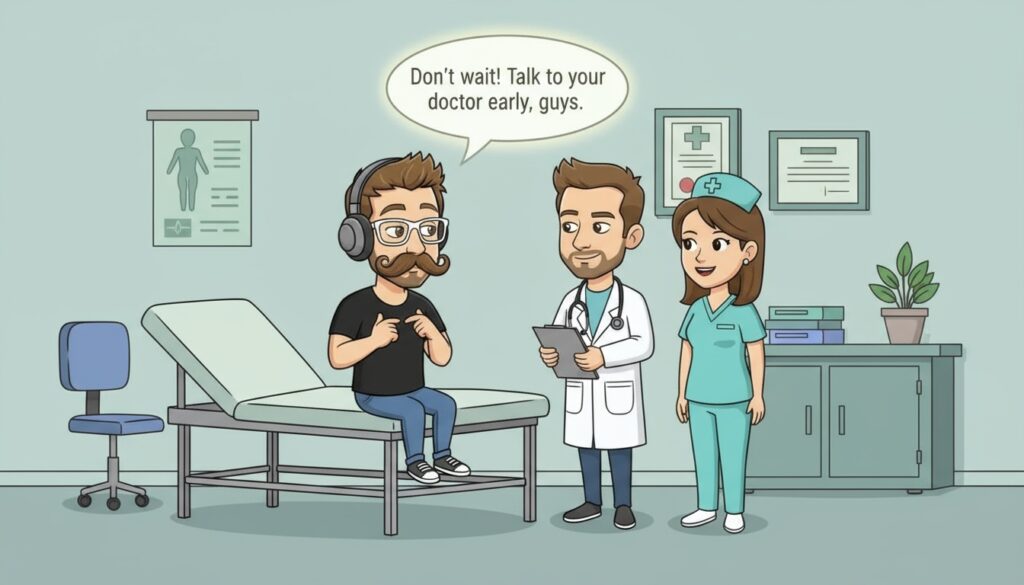
That should change how we talk, and how we act.
Cancer and mental health hit earlier than most men think. Prostate and testicular cancer don’t send calendar invites. Suicide remains a leading cause of death for young men in many countries. Silence is part of the problem. Shame does the rest.
Podcasts aren’t a silver bullet. They’re something better. They’re where trust lives. A host you’ve listened to for 100 hours can move you from awareness to action with a single sentence. That’s the edge. That’s why movember podcasts matter.
This guide is built to help you find the right shows, support the hosts driving the conversation, and turn airtime into screenings, donations, and check-ins. We’ll feature active hosts and episodes from 2025, share a quick primer on Movember, and give podcasters a playbook to activate their audience without turning their feed into a guilt trip. We’ll also connect the dots on influence and trust in podcasting. If a host can move mattresses, they can move men to get screened.
If you’re a listener, queue these episodes and share one with a friend who needs the nudge. If you’re a podcaster, build your Movember episode and make it an annual habit. Cancer is global. Action can be too.
Sources we’ll draw on include Movember’s 2025 “Real Face of Men’s Health” reports and official Movember channels. We’ll also link to Discover Pods’ work on podcast influence and trust, because this isn’t theoretical—it’s how behavior changes in the real world.
The stakes: Men’s health is a 20- and 30-something story too
Here’s the uncomfortable math. Earlier detection leads to better outcomes in prostate and testicular cancer. Men often delay screening and ignore symptoms because they “feel fine.” Mental health stigma keeps guys from saying anything until it’s critical. That combination turns small problems into big ones.
Movember’s 2025 reports focus on three areas:
- Prostate cancer.
- Testicular cancer.
- Mental health and suicide prevention.
The throughline is simple. Talk earlier. Test earlier. Normalize the check. Ask twice. Listen longer.
Screenings and conversations aren’t fun. They’re adulting. Do it anyway. Your future self will thank you. Your people will too.
If you want a deeper dive into why audio can shift behavior here, check out our pieces on how podcast ecosystems shape influence and trust.
- Influence and platform power: Navigating Manosphere Podcasts
- Trust dynamics in audio: Podcasts Redefining Media Trust
Movember in 60 seconds
Movember started in 2003 as a moustache-led stunt to spark conversations. It grew into a global movement funding research, programs, and community initiatives for men’s health. Today, Movember is equal parts awareness engine and action plan—screenings, support, and suicide prevention, powered by micro-fundraisers and community challenges. Podcasts fit because stories convert better than stats. Voice cuts through noise. Repetition builds habits.
Why podcasting moves behavior
Audio is a trust business. When a host shares a personal story about a scare, a loss, or a checkup, it gives listeners permission to move. It also sets a norm. “Book the check” becomes the default, not the exception.
Three levers that make podcasts effective for Movember:
- Parasocial relationships: familiarity builds credibility.
- Repetition: the message lands when it’s heard multiple times across episodes and shows.
- Social proof: when creators model the checkup and the donation, listeners follow.
This is where a quick nod to the “men need direction” conversation fits. Men don’t need another lecture. They need a plan and a push. Screenings live in the same bucket as wills, finances, and calendars—the things we don’t want to do but have to. That’s adulting. Do the boring thing that saves your life.
For more context on why podcast influence beats traditional media with younger audiences, read: Podcasts Redefining Media Trust.
2025 Movember podcasts to queue up now
We’re prioritizing active hosts and 2025-linked Movember content. Short, scannable mentions so you can build your playlist and we can celebrate the creators doing the work.
Movember-led and expert voices
Tim Lovejoy — In The Barber Chair (Movember)

Recurring interviews on masculinity, identity, and mental health with Movember’s brand DNA baked in. Good entry point for newcomers to the movement. Source: Movember series reference.
Men Whisperers with Movember
Jane Garvey & Fi Glover (Movember bonus episode on Apple): candid conversation on men’s health and the “say it out loud” hurdle. Warm, accessible, and practical.
The Better Man Podcast
The Better Man Podcast: “Feel More & Think Less” (Spotify): an evidence-forward take on men’s mental health from a leading Movember expert. Actionable tools for guys who don’t love “feelings talk” but want outcomes.
PC-PEP Podcast


Dr. Gabriela Ilie & Dr. Rob Rutledge: prostate cancer empowerment and protocols, with practical advice for patients and partners. Less “awareness,” more “what to do next.”
Health and high performance
High Performance Podcast
Jake Humphrey & Damian Hughes (Movember Exclusive on Acast): reframes health as a performance moat. Strong for listeners who care about goals, routines, and edge. Source: Acast link.
The PAY OFF Podcast

Coach Josh & Dr. Jason Larocque (Movember Special via HWPO): mental resilience, mentorship, and why peers matter. Good for fitness-first listeners. Source: HWPO link.
Healthcare and workplace angles
What The HealthTech?

Jacob Mistry, Harry Heyes, Craig Rainford (Movember episode on YouTube + Instagram Reel): the systems-level view of men’s health and the friction dudes face in clinical settings. Source: YouTube/IG links.
B. Listening (Broadsword)
“Movember, Mental Health and Wellness” (Apple): practical tips for men and managers. Useful for teams trying to support their people, not just post a moustache selfie. Source: Apple link.
Culture and conversation
To Be A Boy

Masculinity influencers, how content shapes boys and men, and what responsibility looks like on-platform. Source: Spotify link.
The Poetry’s Dead Podcast

Movember mental health episode: art as an on-ramp to hard topics. It’s not for everyone. That’s the point. Different doors for different listeners.

Founders and ambassadors
We Are For Good
Adam Garone (Movember founder): the backstory, the model, and why the moustache is just a hook for deeper behavior change. Sources: Movember LinkedIn/Instagram references.
Purpose Made Podcast

James Martin (Movember Ambassador): the “why” behind the movement inside a broader purpose conversation. Source: Purpose Made link.
Movember series hub
Movember Podcast / Movember series revivals: When in doubt, start with Movember’s own channels and series resurfacings. You’ll get fundamentals, current campaigns, and a path to act. Source: Movember UK “reignites podcast series” post.
Looking for a related cancer lens from outside the Movember network?
We covered one that hits home for a lot of families: The Colon Health Podcast. It’s a reminder that screening stories cut across cancer types, and the playbook is similar: talk about it, book the appointment, share the resource.
How to use this list:
- Start with one “expert” episode and one “story-forward” episode.
- Share one with a friend who won’t book the check on his own.
- If you host a show, DM two of these creators and propose a crossover. Borrow their momentum. Add your audience. That’s how we grow the pie.
Keywords you’ll find naturally in these episodes include men’s health, prostate cancer, testicular cancer, mental health, suicide prevention, and Movember fundraising. The point isn’t to memorize terms. It’s to move men from “someday” to “today.”
Playbook: How podcasters can activate their audience for Movember
Do you have a podcast?
Then you have a voice. You have a platform.
You don’t need a medical degree. It’s not about expertise, it’s about participation and awareness. This is one of those situations where being loud is sufficient. No expertise necessary.
So if you don’t need a medical degree, what do you need?
You need a plan. Here’s a simple framework that works, from one indie feed to a network flagship.
Make Movember an annual content asset
- Publish one Movember episode in November.
- Tell one personal story (yours or a guest’s) that makes the case for screenings, early action, or mental health check-ins.
- Share one simple resource stack in the show notes:
- Screening guidelines and how to book.
- A donation page.
- A crisis or support line appropriate to your audience.
- Repeat the Movember resources in your next two episodes’ intros. Repetition wins.
Partner smart
- Book a Movember expert like Dr. Zac Seidler for authority and clarity.
- Co-host with another show for reach and social proof.
- Ask a sponsor or local business for a donation match tied to listens or shares.
Design for conversion
- Put the CTA in your voice. “Pause this episode and book the check. I’ll wait.”
- Repeat the important URL twice in the episode.
- Pin a post on your social platform of choice with the links.
- Read two listener stories (with permission) to normalize the action.
Track what matters
- Episode saves and completions.
- Clicks on screening and donation links.
- Listener DMs and emails reporting booked appointments.
- Total dollars raised if you run a campaign.
If you want ideas that reach younger men fast, read Movember’s notes on influencers and digital outreach. And if you want a sense of how influence gets weaponized or harnessed in podcast ecosystems, start here:
Keep it location-agnostic. Link to global resources when possible and let listeners pick their country chapter. Cancer doesn’t care about borders.
Listener action: five things to do after your next episode
- Book a screening or set a reminder right now. If you’re under 40, know your risk and baseline; if you’re older, get on schedule.
- Share one of the episodes above with a friend who needs a nudge.
- Donate to a Movember team or a host’s campaign.
- Check in on a friend. Ask twice. Listen longer than you usually do.
- Pick a challenge you’ll actually finish—miles, pushups, moustache, cold plunges—and post progress to keep yourself honest.
If you do one thing today, book the check. If you do two, book the check and send this guide to a friend.
Updating this guide: evergreen with annual refresh
We’ll refresh this list every October with new movember podcasts, active hosts, and current resources. Podcasters, send us your Movember episode link for inclusion. Listeners, treat this as your November playlist. Share it with your group chat, your team, your family.
This post will live under Health with a Cancer tag so you can find it fast when you need it.
FAQs about Movember podcasts
What are the best movember podcasts to start with?
- Start with one expert-led show and one story-first episode:
- The Better Man Podcast with Dr. Zac Seidler (expert frameworks).
- Men Whisperers with Movember (candid, stigma-busting talk).
- In The Barber Chair (Movember) with Tim Lovejoy (movement context and guests).
- High Performance Movember Exclusive (habits and performance angle).
How do I know if a podcast is actually supporting Movember?
- Look for:
- Clear calls to action in the episode.
- Show notes with links to screening resources and donation pages.
- Social posts referencing Movember campaigns or team pages.
Are Movember podcasts only about cancer?
- No. They cover prostate and testicular cancer, plus mental health and suicide prevention. Many blend fitness, performance, relationships, and workplace wellbeing because life doesn’t split neatly into categories.
I’m a new podcaster. How do I get involved this year?
- Publish one Movember episode in early November.
- Invite an expert or a creator from this list for credibility and reach.
- Share resources in the notes and in your social pins.
- Run a simple challenge with a small prize or a donor match.
- Ask listeners to DM when they’ve booked a check—then read those messages (with permission) in the next episode.
Can I listen year-round?
- Yes. Cancer and mental health aren’t seasonal. Use November as your push, then keep light touchpoints the rest of the year.
The point of the mic
This isn’t about brand safety or feed aesthetics. It’s about outcomes. One host telling one story can push one listener to make one appointment. That’s how this scales—one boring, adult decision at a time.
So here’s the ask:
- Book the check.
- Send this guide to a friend.
- If you have a platform, use it. If your show can sell a mattress, it can sell a screening.
Share these movember podcasts. Move one guy from “someday” to “today.”